Out of the Tunnel

It has already been two weeks since the operation to remove a NET from my mesentery.  My ordeal began on Monday, March 2 at 5 pm when I checked into Cedars-Sinai Medical Center for an unusual early-evening combined colonoscopy and endoscopy.  I remember nothing of these procedures other than waking up about 30 minutes later with a blurry doctor telling me he found nothing. My innards were perfectly clean as far as he could see, which is pretty amazing considering the abuse I have subjected them to over the years.   Since my surgery was scheduled for the next morning at 7 am, they kept me right there in the hospital.
IMG_1701
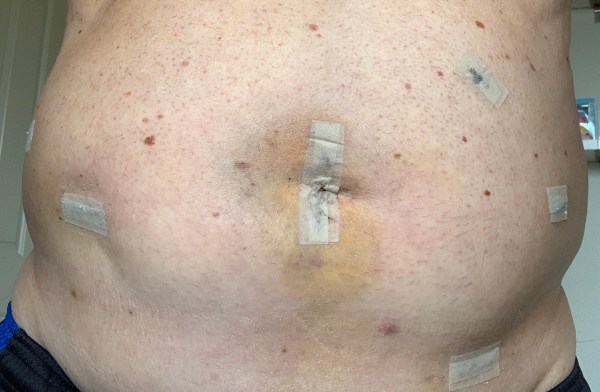
Five tiny incisions, and one slightly larger one.  I’m pretty sure I no longer have a belly button.

The next several hours were a blur.  I think they must have slipped me something.  The last thing I remember was looking at the red digital clock across the room and seeing 7:00 a.m.  I awoke amid a misty commotion all around me of doctors and nurses.  I squinted through the chaos and saw another red LED clock that read 10:00 PM……Holy shit!  10 PM???  I remember doing the math and thinking I was out 13 hours!!!! Later I figured out it was really 15 hours!  I was expecting 2-3 hours.  Early the next morning I was told the operation actually took 9 hours, but it took me another 6 hours to come out of the anesthesia.

According to my surgeon, who stopped by the morning after, the surgery took much longer than anticipated due to the positioning of my mesenteric tumor amidst a jungle of critical blood vessels.  If he were to nip one of them, I could lose half my bowels.  He made the decision to go 100% robotic knowing that this would triple or quadruple the time for the operation, but allow for very precise cuts.  As a bonus, they found the primary (e.g. “original”) tumor in my small intestine, which they resected. I have been assured that I won’t miss the 9 cm of removed bowel.  The primary tumor was not visible on any of the previous scans, and that they found it is of great significance.  There was no longer any mystery about the source of my mesenteric tumor, and by removing the primary tumor, my chances of a quick recurrence should be reduced.
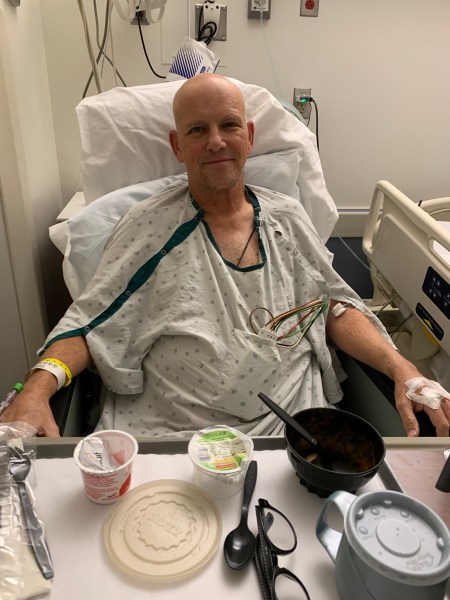
IMG_1693
Day 3 in the hospital.  I look way better than I feel.

My doctor asked how I was feeling, and I told him I felt like someone punched 6 small to big holes in my belly, rummaged through my entire digestive tract, then yanked out a sizable section out through my belly button.  And then Mike Tyson used my belly for a punching bag for 5 minutes.  Actually, except for Mike, that is pretty much just what happened.

The next 6 days were a roller coaster of progress and setbacks, including an infection of unknown origin that left me feverish for 2 nights, getting dropped by a rushing X-ray tech (set me back at least 1 day), spasming at my first attempt to drink a clear liquid, and pained shuffles up and down the corridors.  But progress finally won out over the setbacks, and they released me almost exactly 1 week after I was admitted.

I made my final visit today to Cedars-Sinai for a last follow up with my surgeon.  He gave me the good news that I am officially NED (no evidence of disease)!  But Neuroendocrine tumors, even when you’ve had them removed, have a propensity to recur.  So I will be on a surveillance program, with scans every 3 months for at least the first year.  They are recommending that I can stop the monthly injections that I have been getting to slow down the cancers growth (a big relief to my digestive system).  This is all the best news I could have hoped for!

The care I received at Cedars-Sinai was amazing, from the orderlies, nurses, technicians (well, except for that one harried X-ray tech) and the dozen or more doctors that were involved in my care.  My main team consisted of my surgeon, a NET oncologist, gastroenterologist, and urologist.  All of them have been caring, funny, and exuding professional competence.  In spite of this being the most difficult medical journey of my life, I feel like I made the best choice!

I’ve now been staying with close friends just waiting to heal up sufficiently to fly back home to Thailand.  In the meantime, the world has imploded with the Covid-19 pandemic and it’s now a race against time through a dark tunnel to get back home before Thailand closes its gates.  If I can’t get back in time, I will be officially homeless…
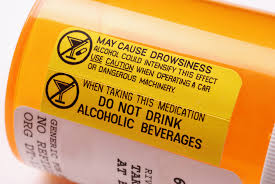
Life Lesson #1: Believe the Labels

A quick update (as usual) regarding my upcoming tumor extraction.  My surgery has been delayed until Tuesday early morning March 3) due to a slow insurance approval.  I’ve been assured that everything is now is now a go.  The fun starts Monday with a double scope (endoscopy/colonoscopy, hopefully not at the same time) at 5 pm to be followed by an overnight in the hospital and surgery bright and early (7 am) on Tuesday.  Light is now slightly visible at the end of the long tunnel.  Now for the life lesson.

vicodin
Who reads this?

When my son, Chanon was around 8 years old, I wanted to expose him to winter sports.  I skied from a very young age, and I wanted the same for Chanon.  He decided that snowboarding was more fashionable.  OK, I said, then I will snowboard too.  How hard can it be?  I am an expert skier, and sliding on snow with one board or two can’t be that much different, can it?  So we travelled up to Mammoth Mountain, California for a weekend of snowboarding.  Saturday morning I marched into the rental center and rented a snowboard and boots, while Chanon had a snowboard lesson.  I waited while his lesson finished, then we both headed for the lift.  I confidently strapped on the board like I’d been doing it my whole life, and managed to get on the lift without incident, but I kept reaching for my non-existent ski poles.  Getting off the lift at the top (of the bunny slope) was another issue.  I immediately face planted and had to be quickly dragged out of the way by the lift attendants.  I then proceded to wipe out at least 10 times in the 30 m between the top of the lift and the start of the downhill.  By the time I was 100 m down the slope, I had fallen so hard on my ass that I was pretty certain I had broken by coccyx.  Chanon enjoyed this very much.

That “run” ended after 100 m, when I unceremoniously unstrapped my snowboard and post-holed my way to the bottom of the run and marched straight into the snowboard school.  One lesson and I was good to go, although I still fell a few times smack on that broken tail bone.  Unlike skis, it seems with snowboarding, you either fall on your ass, or you face plant, no other choices. However, snowboarding is actually easy once you get the non-intuitive hang of it.  But the damage to my bum was done.  From that day on, for the next several years, I lived with a sore ass.  It felt ok most of the time, until I sat for more than 10 minutes.   X-rays showed  that it was deeply bruised, but intact.  Apparently your coccyx has a limited blood supply and heals slowly.  For me, that was about 5 years.

I could deal with the pain by sitting on the edge of my seat, or getting up out of my chair every few minutes.  The hardest thing though was enduring the 20 hour flight back and forth from the USA  to Thailand, which in those days was a 2-3 times per year ordeal for me.   I bought one of those neck pillows, and sat on it with my coccyx in the hole, but that only slightly delayed the agony.  Vicodin to the rescue!  I was given a prescription of this opioid following a root canal, and dutifully filled it, but never needed it.   I quickly found out that a dose of Vicodin about an hour into the flight would easy my pain and allow me to sleep for several hours.  Mostly, I avoided any alcohol prior to taking the Vicodin….until one fateful trip.

I justified the pre-dinner scotch and soda by telling myself that I would wait a couple of hours before swallowing the Vicodin.  Yea, I know the label on Vicodin says “no alcohol”  but who reads those?  Everything felt fine, and I sat reading a novel waiting for the medication to kick in.  Suddenly, I felt something I’d never felt before, and it is very hard to describe.  It felt like my blood was quickly heating up and turning to steam.  The word began to swirl.  I thought to myself – is this what it feels like to have a stroke?  Or was this a heart attack?  Or was I about to explode because of an alien fired energy beam?  Somewhere in the inner, reptilian part of my brain, I decided that I was dying, and that since I was dying it would be a whole lot better to die in the toilet rather than in my seat.  I was seriously afraid that no one would notice for several hours if I died in my seat.  I’d probably stink by then. So I undid my seat belt, rose, and took 3 steps down the narrow aisle toward the aft of the plane. Boom!  Out cold in the aisle, at 40,000 feet, somewhere over the north Pacific Ocean.

I awoke a few seconds/minutes/hours later.  I was on my back looking up at three lovely Thai Airways flight attendants, their gorgeous faces swathed in ethereal auras, staring down on me.  I was certain that I was dead and this was heaven.  That notion was soon dispelled in a wave a nausea and dizziness.  The young women managed to haul me up to my feet and back into my seat, but I told them that I was about to pass-out again, or throw up, or both at once.  They quickly moved me up to one of the lay-flat business class seats, and I was comatose within seconds. Some unknown time later one of the male flight attendants rudely shook me awake and ordered back to my economy class seat. I guess my allotted time to be ill was finished.

I slept quite good the rest of the flight, and my ass didn’t hurt.  I survived, albeit a bit shaken.  Life lesson:  Vicodin or alcohol.  Not both.  Read and believe the labels.  Since that time, I have chosen alcohol, and left the Vicodin at home.  And several years later, my coccyx finally healed.

Coming Out of the Closet

banana-295369_1280

Before I come out, just a quick update on my pending NET removal.  I’ve met with the surgeon, had my MRI, and had my pre-op testing completed.  Forward all engines!  My surgeon, Dr. Kosari at Cedars-Sinai Medical Center in LA was very upbeat.  He said the surgery should be buying me many years.  I may get my gall bladder out as a bonus; this is a preventative measure since the octreotide injections that will likely be a long-term part of my life tend to gum up your gall bladder.  Why do we have a gall bladder anyway since we can apparently survive quite nicely without one?  Maybe they should just remove it at birth along with your appendix. My surgery is scheduled for 7 am February 28.  Stay tuned.

At the risk of TMI, now for the closet.  Not the closet you’re all thinking of (sorry to disappoint).  It is an embarrassing medical closet.  It tuns out I am afflicted with another hard-to-treat disease. If you are at all squeamish about the details of men’s anatomy, now’s the time to close your browser………

I have Peyronie’s disease.  You can read all about it here.  I’ll give you the one sentence definition:  It is a condition whereby scar tissue builds up within your penis causing it to bend at a rather inconveniently acute angle (mine is about 70 degrees) that makes any kind of traditional bedroom fun geometrically impossible (not to mention extremely embarrassing).  The cause is thought to be either an acute injury or (as in my case) accumulated unnoticeable minor injuries during intercourse.  Woman-on-top is a big risk factor.  As my urologist at Cedars-Sinai said, it is perhaps just abnormal wear and tear.  Here’s what blows my mind:  According to my urologist, 9% of older men have this condition (and 3% of younger men)!! How could nearly 10% of men have this condition and I never heard of it until Dr. Google revealed it to me?  More likely than not, one or more readers of this blog also suffers this disease.   It’s time to bring this disease out of the closet. Sure, this is an embarrassing ailment, but really is it more embarrassing than hemorrhoids?  Worse than jock rot?  Worse than ED?  Worse than incontinence? We see all of these on tv ads everyday.  Hopefully more awareness will lead to more research and more treatments.  Hence my coming-out party.

I do understand why this malady is in the closet.  It takes a very heavy psychological toll.  Some men have been known to become suicidal.  To be sure, as ailments go, there are many worse diagnoses.  No one has died from Peyronie’s (not counting suicides).  For me, the realization that I had a condition that was not immediately treatable (at least in Thailand), and that would prevent sexual activity, was devastating.  Being otherwise healthy, but realizing sex was not going to be part of my life, hit hard.  With the help of a very understanding partner, I focused on other aspects of life.  In the end, I have to come to the realization that overall I’ve been pretty damn lucky, and there was still plenty to live for.  But not being able to be intimate with my partner is still quite painful.

It started about 18 month’s ago, so I have known about it for awhile.  Unfortunately, in Thailand, the only treatment they know about is radical surgery that sounded to me like partial castration.  I even travelled to a so called “specialist” at a top end hospital in Bangkok.  Surgical straightening, resulting in drastic shortening, was the only option he offered. Maybe I only imagined the sneer on his face.  

This week I found out the good news that there is minimally invasive treatment for Peyronie’s available in the USA. The treatment involves expensive injections of FDA approved, scar dissolving Xiaflex, and physical therapy (kinda sounds like rehabbing a shoulder injury).  My urologist said I am an ideal candidate – my condition has reached a “chronic” phase with no pain and no progression and my scar tissue is in the best location for this treatment.  So there is hope!  The treatment will necessitate anywhere from 1-4 sets of injections (each set done over a 5 day period) with each set of injections spaced 6 weeks apart.  This would necessitate returning to LA from 1-4 times this year (I can’t have an injection while rehabbing my cancer surgery).  Pending insurance approval, my first injection would be in August.  

The question now will be, is it worth it?  If I was 35 years old there would be no question, but at my age?  The cost of 4 trips to the USA will be substantial.  According to the doctor, the success rate is better than 50%, but I still risk spending money for nothing.  This is a decision that I will need to make over the next few months.  For now, I will concentrate on my upcoming surgery and the aftermath.  I will revisit this once I am fully recovered.  Who knows, by the end of the year I just might be once again an upstanding man (groan).

Thank you for allowing me to share this story.  Just getting it out here is a cathartic.  It will be nice not to have hide in the closet, and I’m ready for the inevitable banana jokes!

Why I Couldn’t Breathe

The long walk from Namche Bazar to the airport town of Lukla took all day. While mostly downhill, the trail climbed in many places because of the rugged terrain. I had plenty of time along this tiring march to think about the last two weeks, and why I couldn’t complete the trek.

A55A7264-923A-47EE-8C24-69193535E3F3
My lunch stop on the last day.  Lots of ups and downs going along this valley.

About 15 years ago, one afternoon I went out for a run and found myself gasping for breath after only a few minutes. I fought through it, and my breathing improved and I was able to complete the run. For the next couple of weeks, the same thing happened, it was as if my lungs were closing down at first, but then would improve if I went slow and relaxed. I went to my family doctor and he suspected I had some kind of asthma. He prescribed an inhaler to be used twice a day. It worked like a miracle. I told the doc on my follow up that it was like having 25 year old lungs again. A few years later, after a long bout with bronchitis, my doc referred me to to a specialist, who confirmed my asthma diagnosis. I had feared that I had COPD, but the specialist said that the inhaler wouldn’t work on that, and that his testing indicated asthma. Relieved, I still suspect that this stemmed from growing up in a miasma of second hand smoke from my mother. For the next several years, I used the inhaler only before vigorous exercise and it worked very well for a very long time.

After retirement and my move to Thailand, I found out that I no longer needed the inhaler. Being older, I didn’t exercise so vigorously, and my lungs seemed to like the moist hot air of the tropics. The bag of inhalers I brought from the USA with me got stashed in the back of a drawer and forgotten. A couple of times during my preparations for the trek, I thought to myself that I ought to take an inhaler along “just in case”. But that item never got on my list, and I didn’t remember again until I was in Kathmandu. BIG MISTAKE. My guess is the extremely cold, dry air triggered my asthma. I was ok while hiking if I started slowly, but it seemed to kick in again while trying to sleep. This would explain my lack of headaches or other typical symptoms of altitude sickness. It also explains why my sleeping troubles began at just 2500 m – it wasn’t the altitude alone, it was primarily the cold dry air. If I had brought the inhaler…..anyway, it’s done now. I have no regrets about turning back.

427C433D-0DC5-4BAF-9088-8A6F0E026909
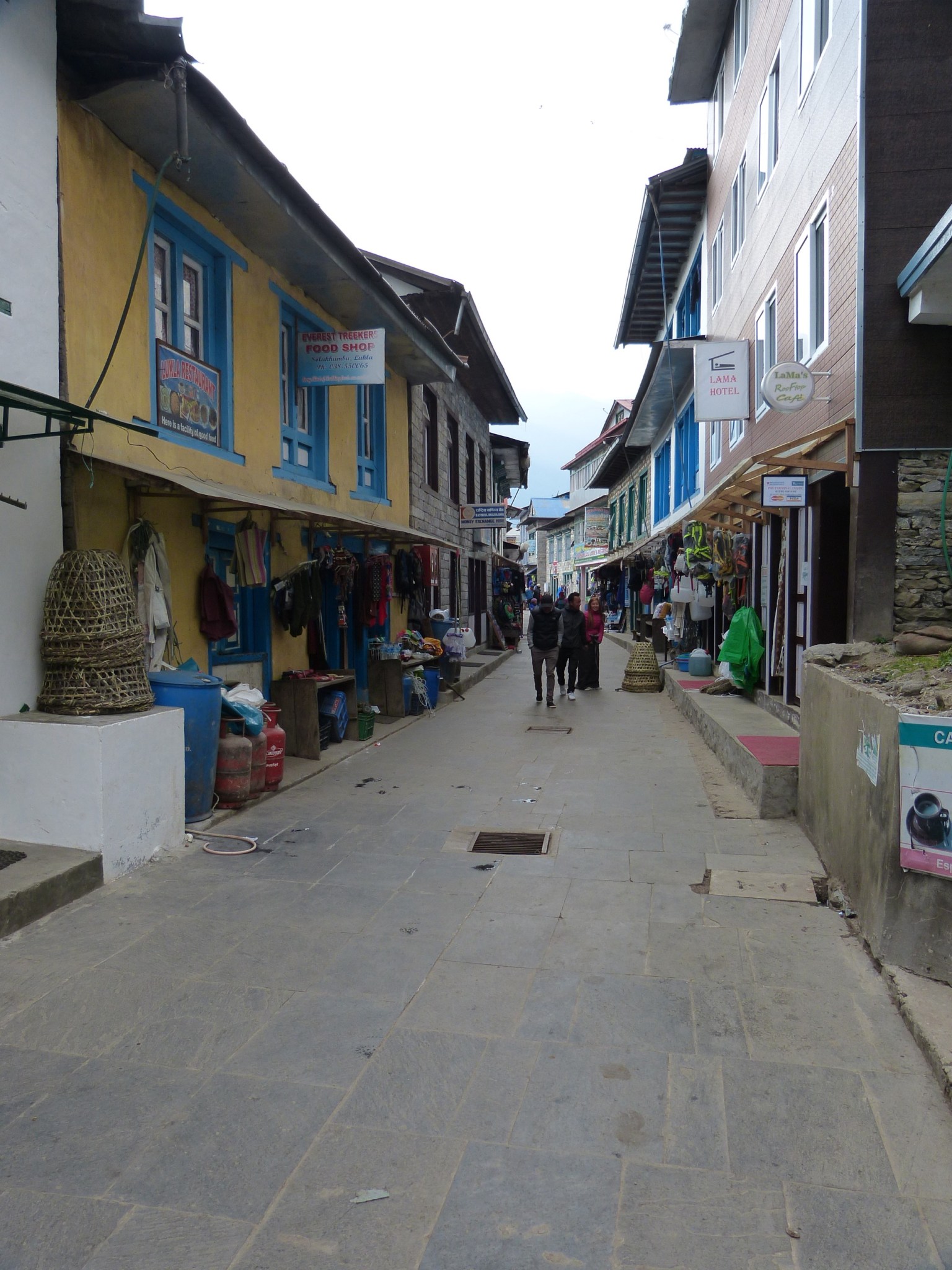
The narrow streets of Lukla.  No motorized vehicles except for planes and helicopters.
64F6E909-A87A-4D52-B6E8-F07C28878270
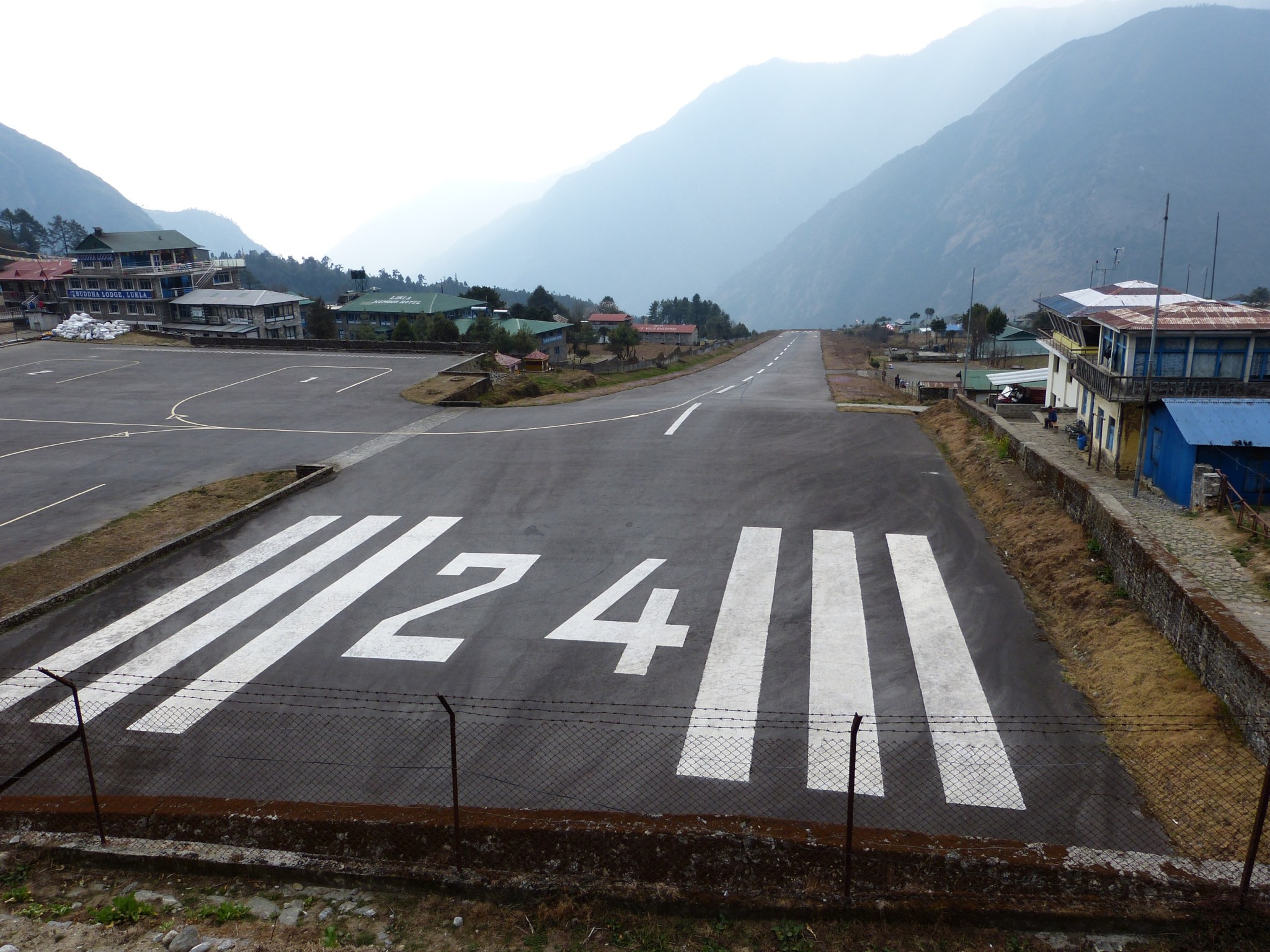
The picture does not capture the true slope of this runway.

I arrived at Lukla about 4:30 pm after hiking in the light rain for several hours. The lodge was literally 50 meters from the runway. Lukla’s airport is unique in that it is not level. It slopes wildly in fact – more than 11 degrees! It looks more like a ski jump than runway. Planes land uphill and take off downhill no matter the wind. Planes landing have only one chance to get it right because an aborted landing is made impossible by the mountain rising of the end of the runway. Many consider this airport the most dangerous in the world.

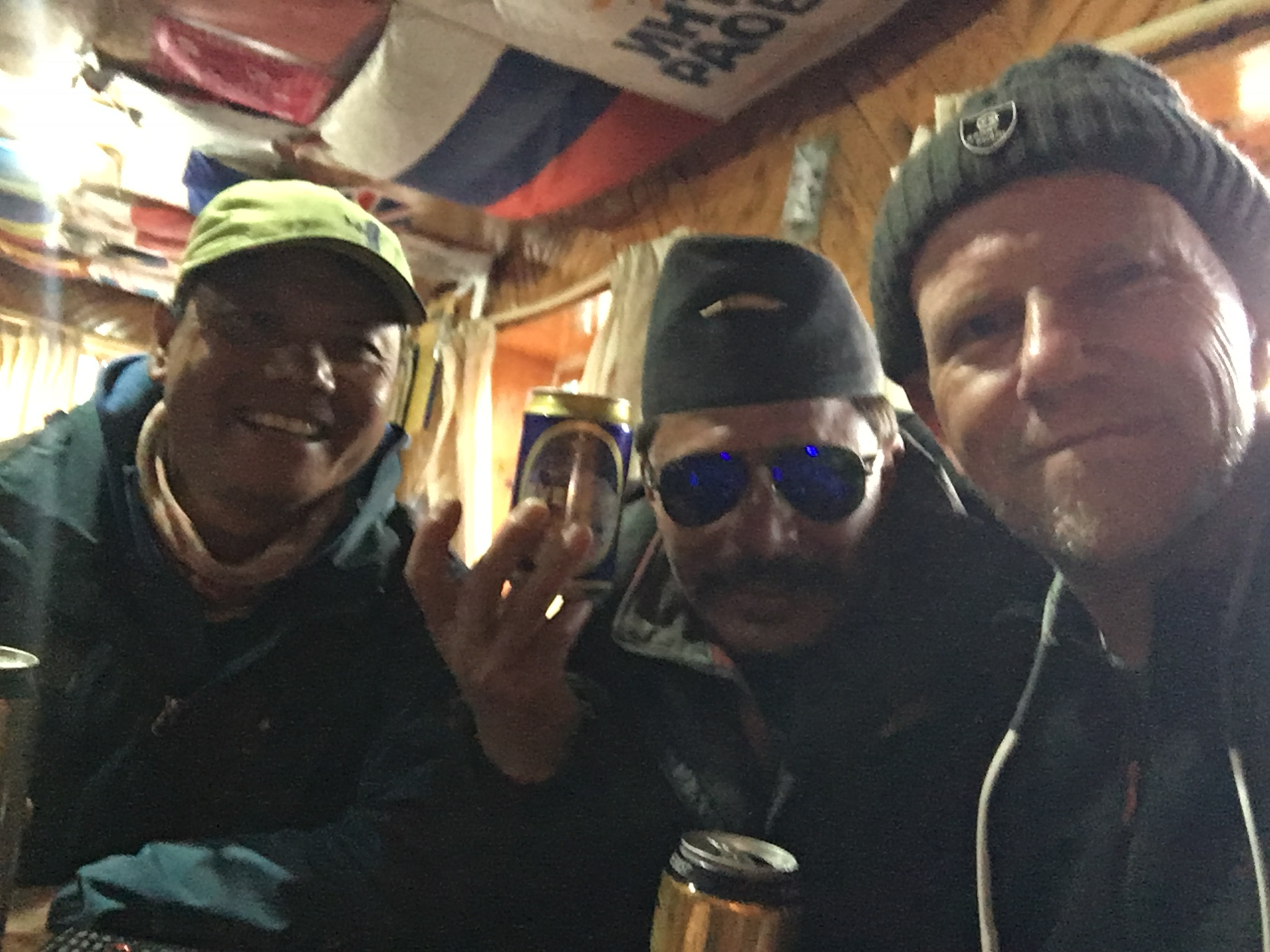
I bought a few beers for my guide  Bhakta and my porter Gokul. Gokul had a few more than a few, and was very loose by the end of the night. Apparently he had a reputation as a brawler in his younger days, he could take on 4-5 others with no problem. Good to have him on my side!

201EFC39-F00F-4C82-B19B-E21352B38F68
Bhakta, Gokul and me celebrating the end of the trek in Lukla.

The next morning, after an E-ticket takeoff, and a scenic flight back to Kathmandu that brought home just how high and immense the Himalayas really are, Bhakta and I arrived safely back in Kathmandu (Gokul turned around and went portering back to EBC from Lukla with a new group of trekkers). Thus ends my adventure. I am back in Kathmandu for one night already, and though the flights are full I will try and get back to Thailand tomorrow. I will be writing another post in the next few days on the equipment I brought that might be useful to future trekkers.

D10506C4-C891-4642-A088-58B5914AFA5A
Walking to our specially designed short take off and landing Sita Air plane for the flight back to Kathmandu.

So what next adventure should I start planning for in 2019? 1. Patagonia? 2. Cruise to the Galapagos? 3. Cycle New Zealand. 4. Golfing in Ireland. 5. Drive the Alaska Highway? 6. Something else?  Leave me a comment with your suggestions.

The Great Cultural Divide

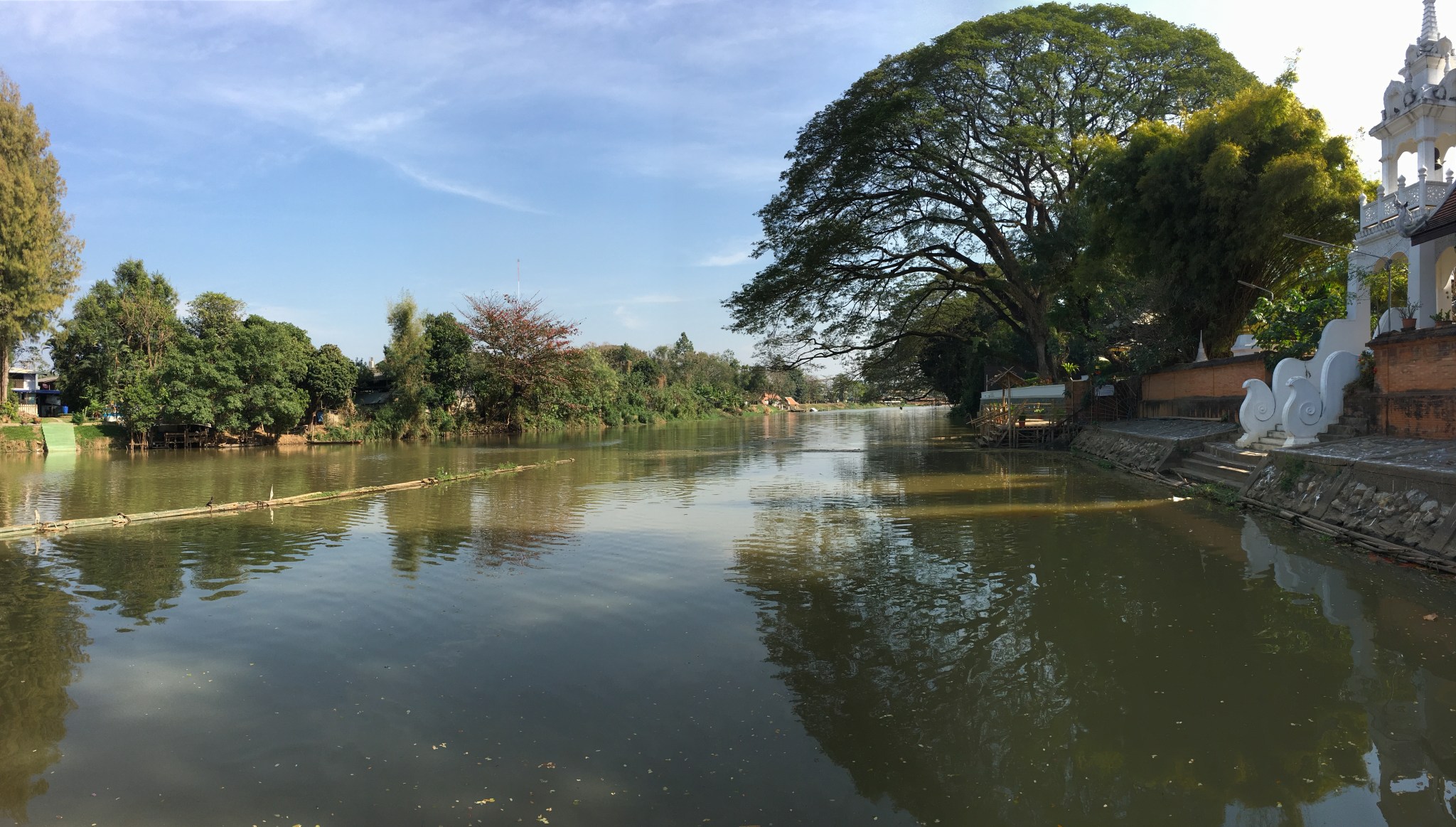
There is no better way to experience the chasm that exists between Thai and American culture than to witness some of the rituals surrounding a visit to a Thai temple.  Recently, I visited Wat Chai Mongkhon with my SO on the occasion of her birthday.  Wat Chai Mongkhon lies on the banks of Chiang Mai’s main river, the Mae Ping.  To my pagan eyes, it seems like a fairly ordinary temple, although its riverside setting is lovely.  That same setting, though does allow for a peculiar ritual that I observed there for the first time.

ping river
The Mae Ping River from Wat Chai Mongkhon

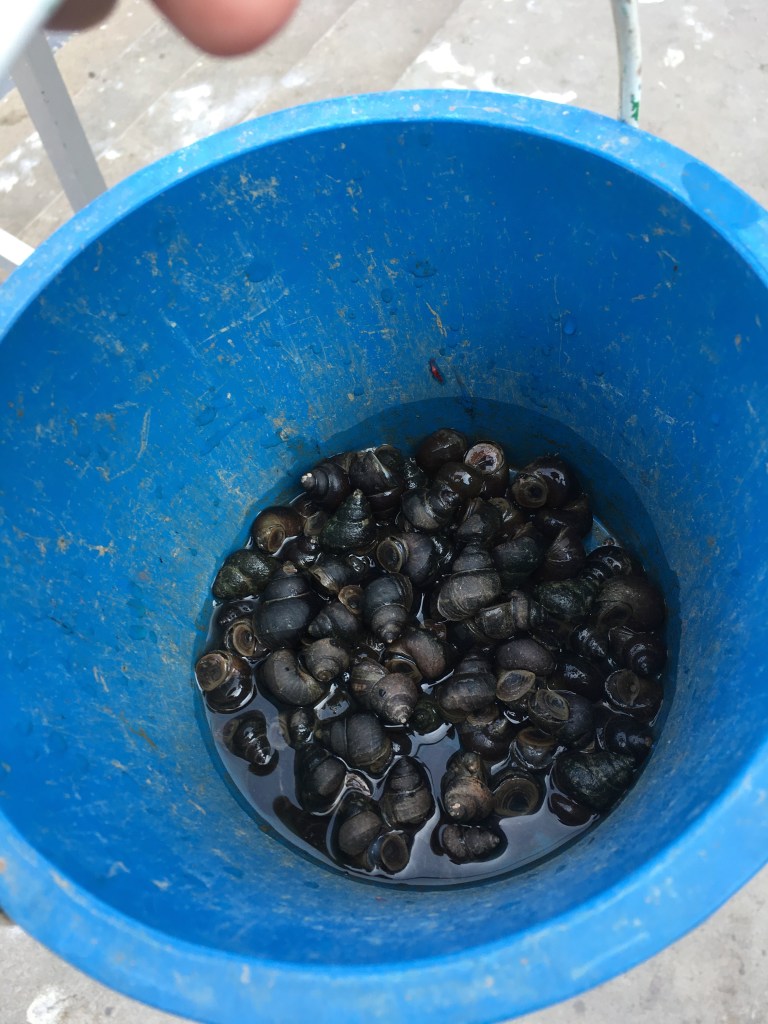
On this propitious day, our first stop was a small shop tucked back in a corner of the temple grounds that sells all manner of live fish ranging from guppy-sized up to small-trout-sized.  The same shop also sells various birds in tiny wooden cages – most of these seemed to be some kind of dove.  They also sold live snails, by the bucketful.  This was no pet store though.  The express purpose of this shop is to sell the animals to merit makers, who then make merit by releasing them.  Hmmmm, more on this in a minute….

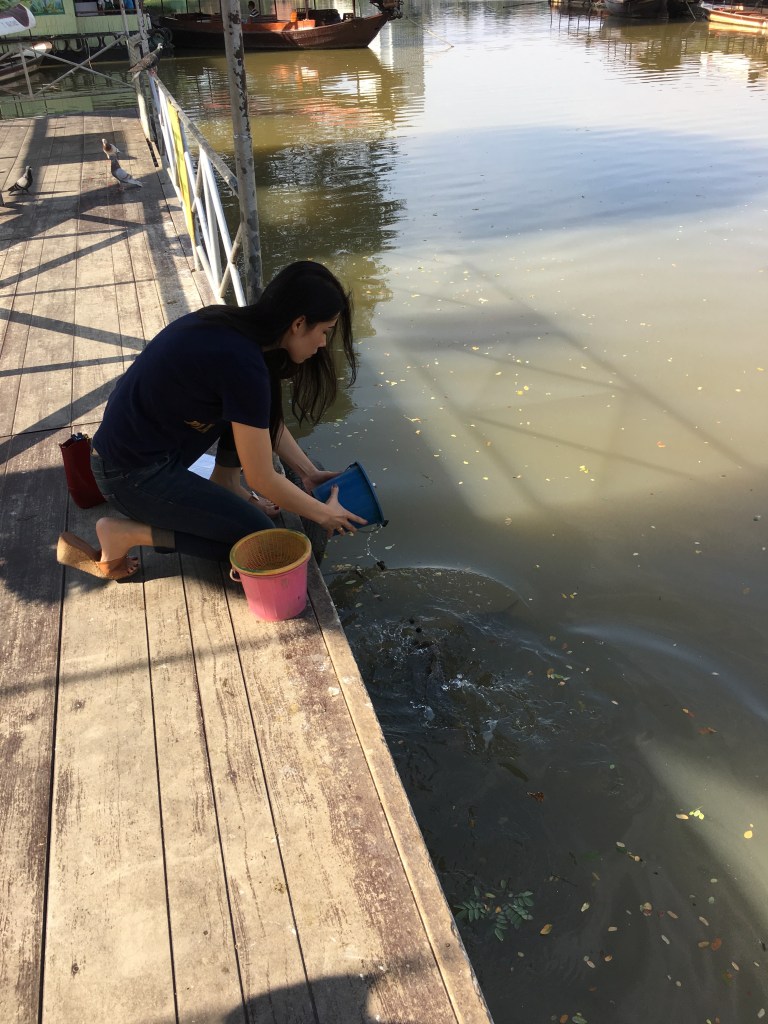
From the shop we proceeded directly to the temple’s interior where a quick prayer was said accompanied by a few bows and wais to buddha.  This part of the ritual I am quite familiar with and lasted only a few minutes.  From the temple we proceeded to the river bank, where amidst a few more bows and the recitation of a long prayer read from one of the laminated sheets picked from a basket on the pier, both the snails and fish were released.  Their release was followed by a nearly instant eruption from the river – a vicious feeding frenzy of huge carp-like river fish.  As far as I could tell, the newly freed snails and small fish experienced a few nanoseconds of freedom before becoming dinner to these exceedingly well-fed riverine scavengers.

Ok.  To the American mind, this seems very strange indeed.  So let me get this straight, someone goes out and catches some wild critters, keeps them in tanks, buckets and cages, and then someone else comes along, buys these unfortunate critters, and makes merit by releasing them to the freedom of the river, only for them to become instant dinner to some lucky fish.  One would guess that the freed birds might have a better chance to enjoy their freedom – at least you could enjoy watching them fly away to meet their fate, but alas, their cost is quite a bit more.  The American mind cannot help wondering if the merit made by the purchaser sufficiently cancels the merit lost by the animals’ capturers, keepers and sellers.

Now. Here is how the Thai mind sees it……

Sorry, but I have no clue how the Thai mind thinks about this ritual, in spite of numerous conversations with Thais about this very subject. I do know that each kind of fish/bird/invertebrate has a particular kind of merit that is gained by their release.  Some impart good health, others will bring good luck with finances, still others will impart a long life.  You get the idea.

When I asked who decides which animal imparts which kind of merit, my SO replied that that is like asking who decided the meaning of a word.  Wow, that was a very revealing answer! Apparently this ritual goes far back into antiquity, and involves deep beliefs that have been passed down through so many generations that their origins have been lost.  These beliefs run gut-deep and no manner of western logic will unseat them.  My guess is that if you brought a Thai into the Catholic Church of my youth, they would be equally mystified.

fortune

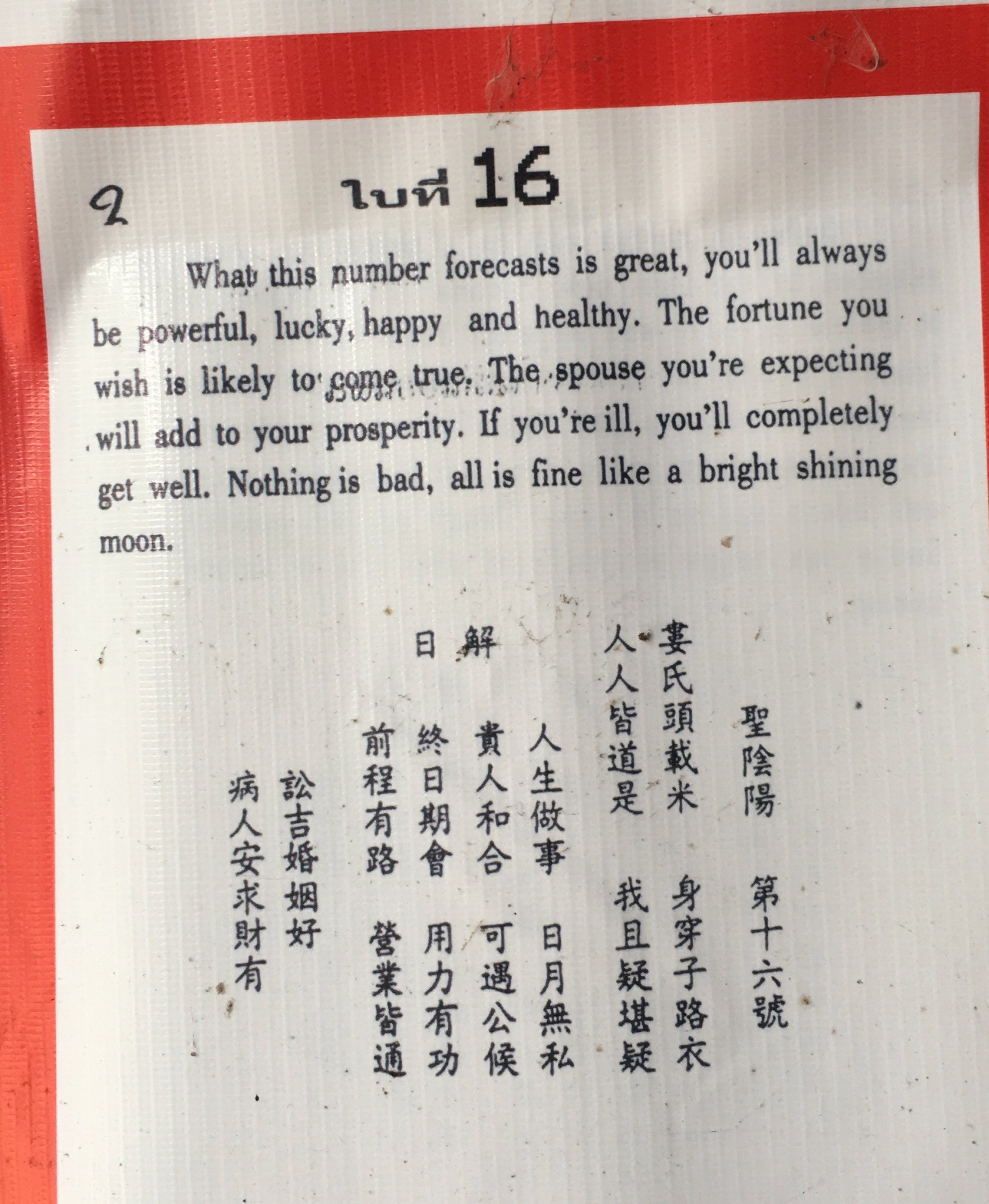
The third and last stop in our merit-making was a ritual that I have experienced on numerous occasions – one of my favorites.  The merit-maker grabs an open-ended cylinder containing about 30-40 joss sticks with each stick bearing a number.  While kneeling in front of a particularly plump and happy buddha, the merit maker gently shakes the container until a single stick falls out.  The number on the stick is then matched to a set of fortunes posted on a nearby bulletin board.  Here’s the fortune we got:

I don’t think you can do much better than that!  All in all it was a very educational visit to the Wat Chai Mongkhon.  Please if any of my Thai friends read this, please leave a comment with your explanation of this interesting and (to a western mind) contradictory ritual.