I want to share some of my thoughts about a topic about which I now consider myself somewhat of an expert: Thai roadkill. Why are there no small mammals included in the population of animals that have been flattened by traffic along the roads of Thailand? Where are all the squashed mice, rats, squirrels, and rabbits? Could it be that all the mammalian roadkill is consumed by the large number of semi-feral dogs that populate the Thai countryside?
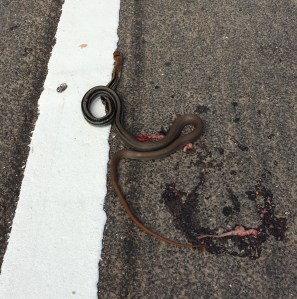
Maybe the solution to this mystery lies in what you do see in the roadkill. Snakes. Millions of them. I would conservatively estimate that I saw at least one thoroughly flattened snake per kilometer of road. I did see one live one that I managed to dodge on a particularly fast stretch of highway. I’m pretty sure he’s about an eighth of an inch thick now.
This one is fresher than most.
So maybe the snakes eat the small mammals before they ever have a chance to be run over by traffic. Or maybe the mammals here, having to deal with all the snakes, are particularly intelligent , and have learned how to avoid being run over. This is the sort of shit I think about along the more lonely stretches of highway.
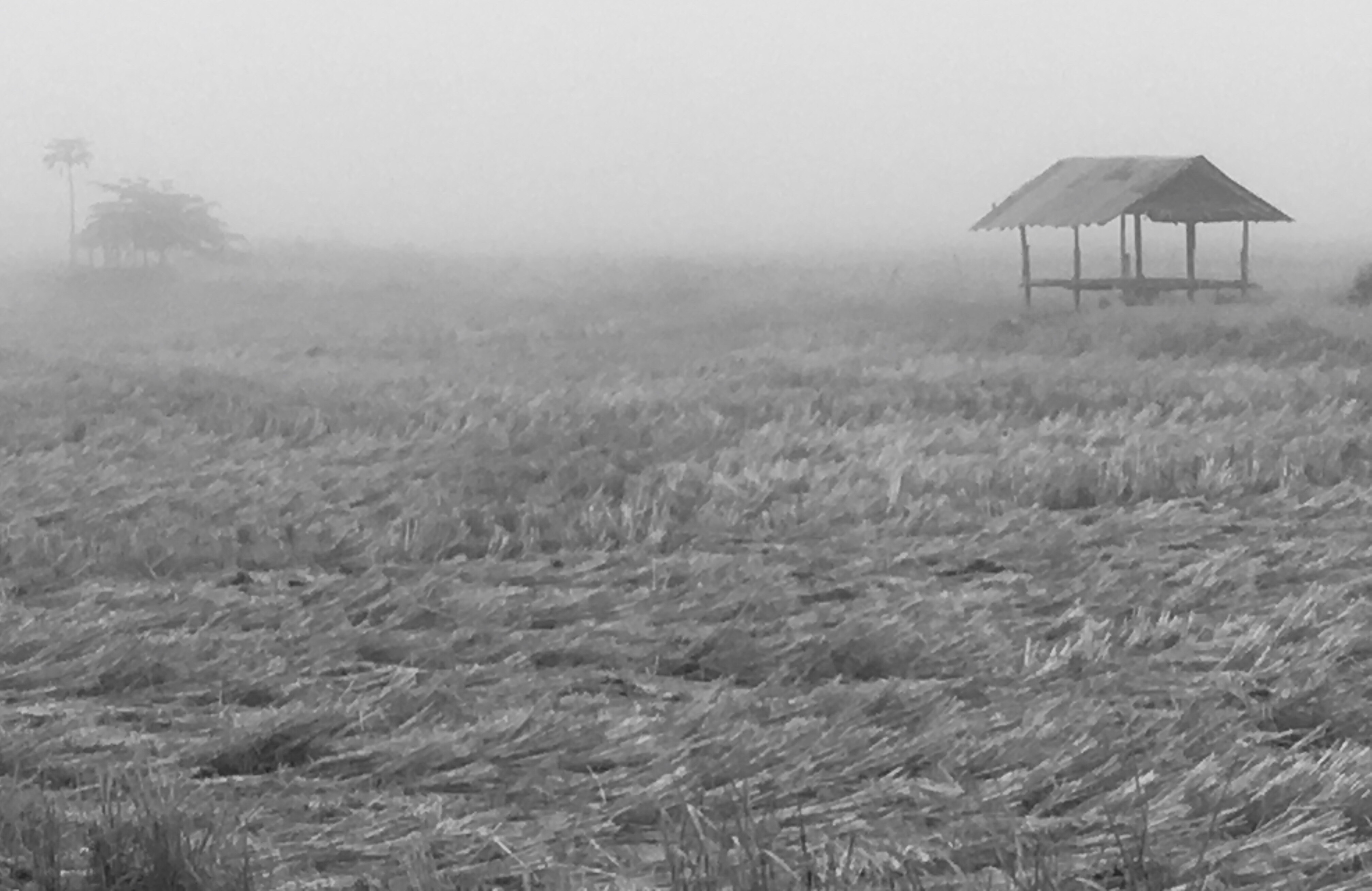
A tough 119 km today. I was on the bike at first light, about 6:15 am. I cycled south through the Nan Basin under a low overcast that turned to fog as the morning aged. Brown, harvested rice paddies loomed through the mist. A smooth road coupled with the flat basin enabled a fast get away.
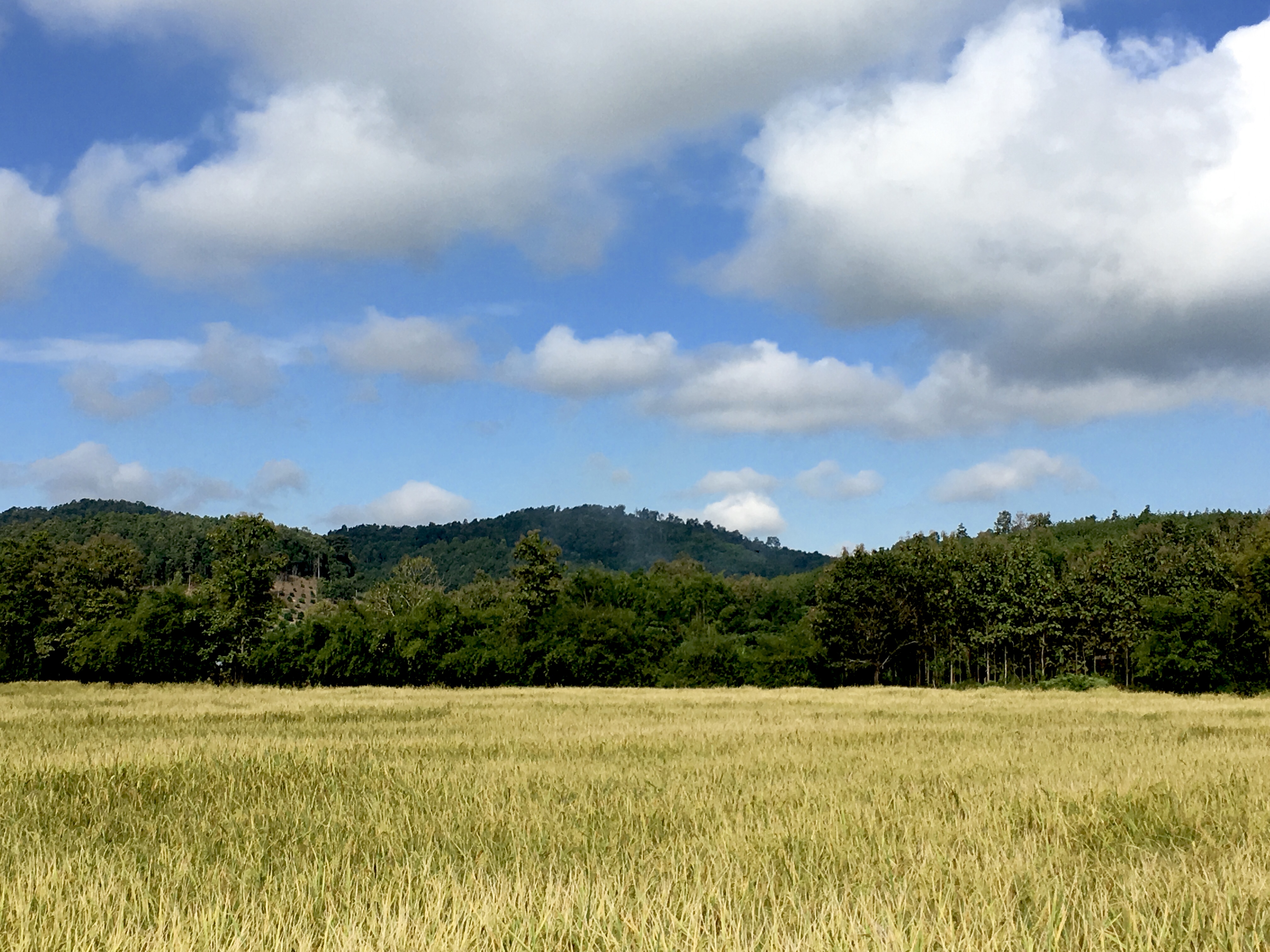
The early morning fog cast an eerie light on the harvested rice paddies north of Nan.
At the South end of the basin I turned right towards Phrae and the ride took a turn for the unpleasant. Apparently this was the year to make the entire route through the mountains between Nan and Phrae into a four lane road. Next year this will be a fun, smooth ride. Uneven, rough pavement, bulldozers and graders, flag men, and dust, oh the dust! made me want to forget this crossing. On the plus side, the climb was only a couple of hundred meters vertical, and given my early start, I was at the pass, and half way to Phrae by 10:00 am. After another hour or so of winding through the hills with more construction detours, I arrived in the Phrae Basin and had a very smooth and fast run into the town of Phrae, a bustling provincial capital. I was checked into my hotel by early afternoon.
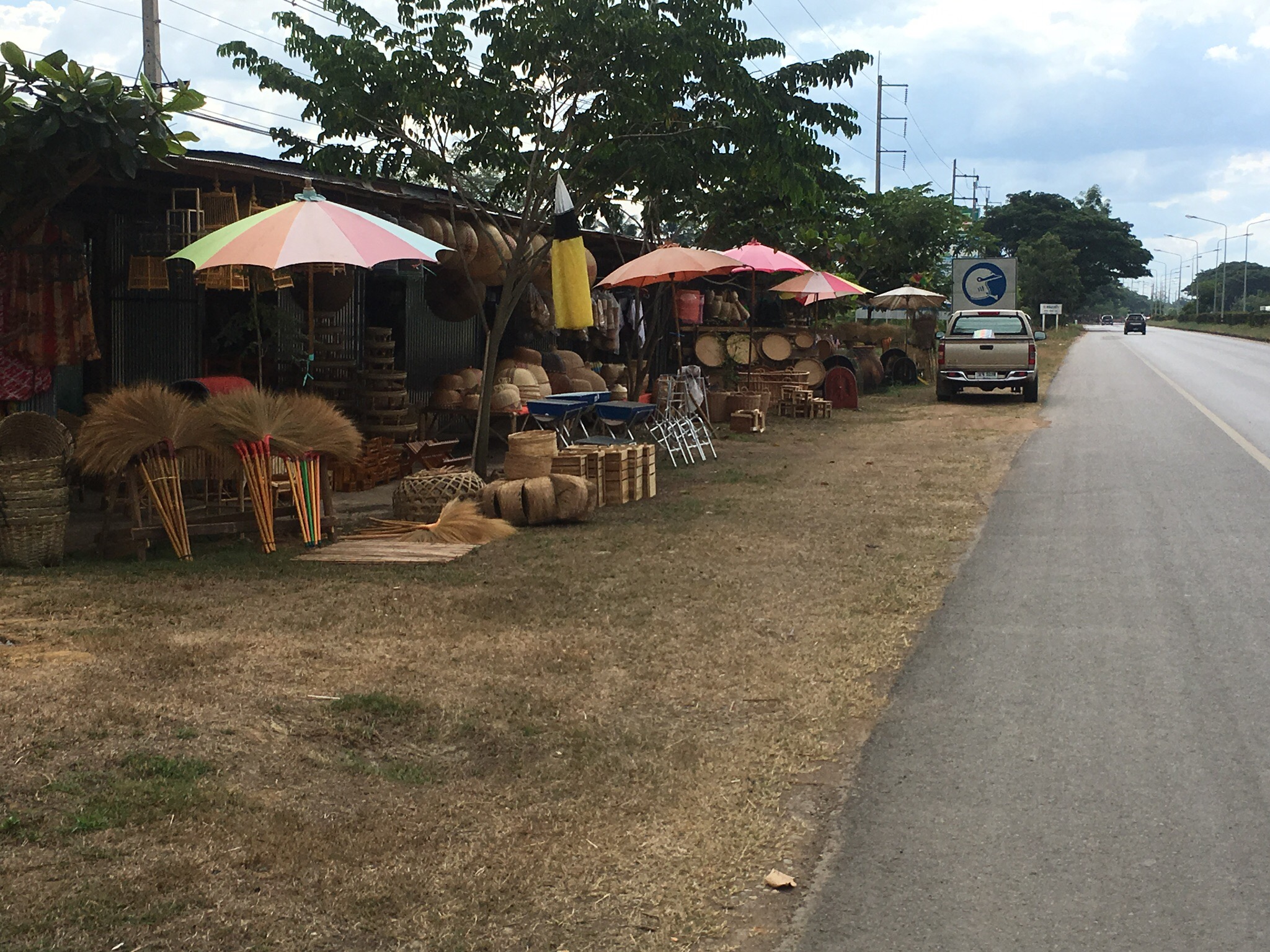
I have no idea why, but Phrae is the capital of broom-making in Thailand. Roadside stands like these selling the famous Phrae brooms and other similar products line the road north of Phrae.
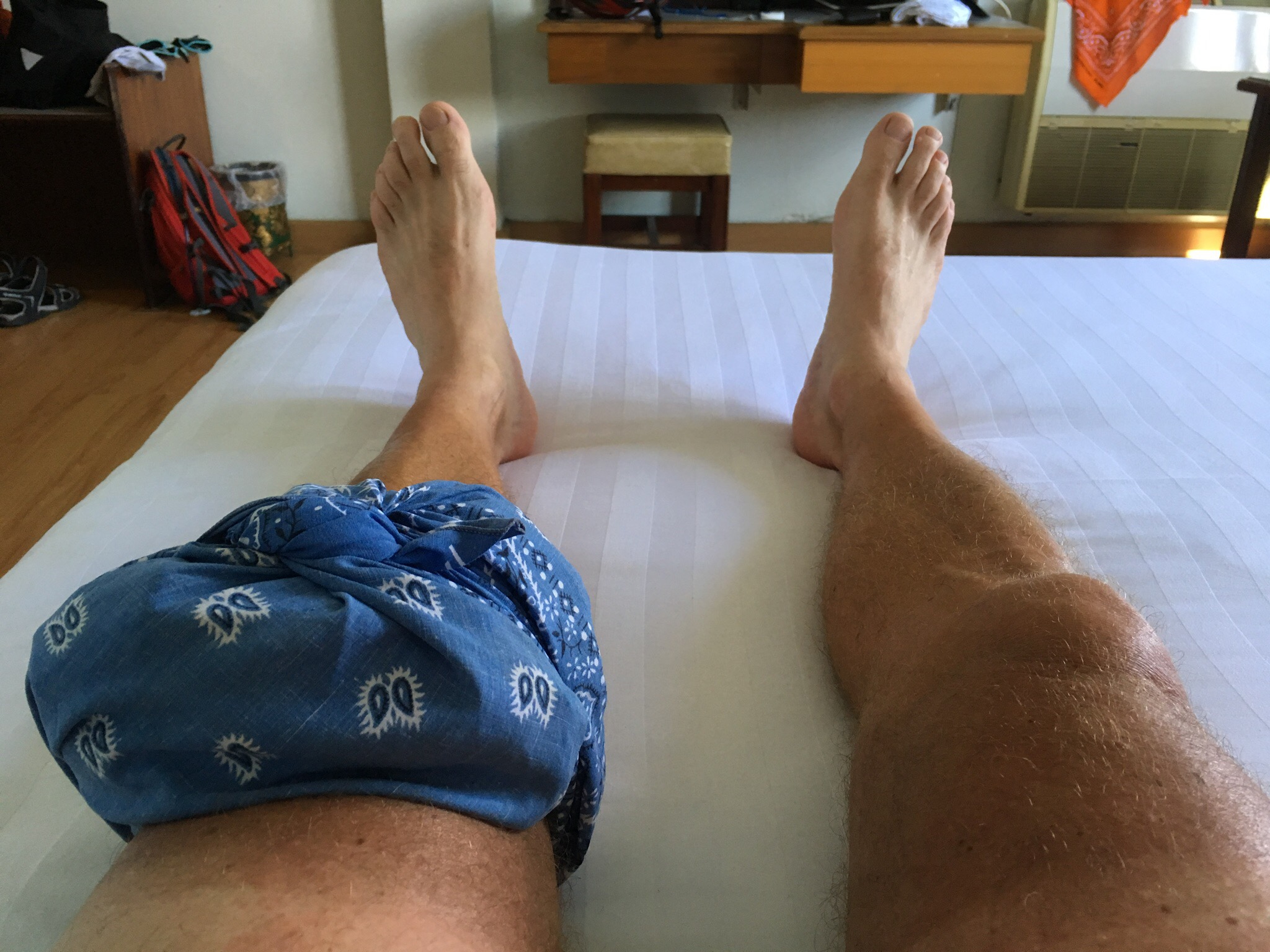
I did have one troubling mechanical problem today….unfortunately my bicycle is just fine, but my left knee isn’t so fine. Strangely enough, it started yesterday afternoon after lying about resting all day. It was sore for about half the ride today, but by the end of the ride it was feeling sort of ok. I’m icing the hell out of it and hopefully it won’t slow me down. Just two more days!
Slight mechanical problem today, hopefully some ice and NSAIDs will see me through.
Tomorrow may be the toughest day yet. In order to get to my next stop, Lampang, another provincial capital, I have to climb over two passes, and cycle between 104 and 113 km, depending on the route I choose. I hope I choose the one free of construction. Talk to you tomorrow from Lampang.
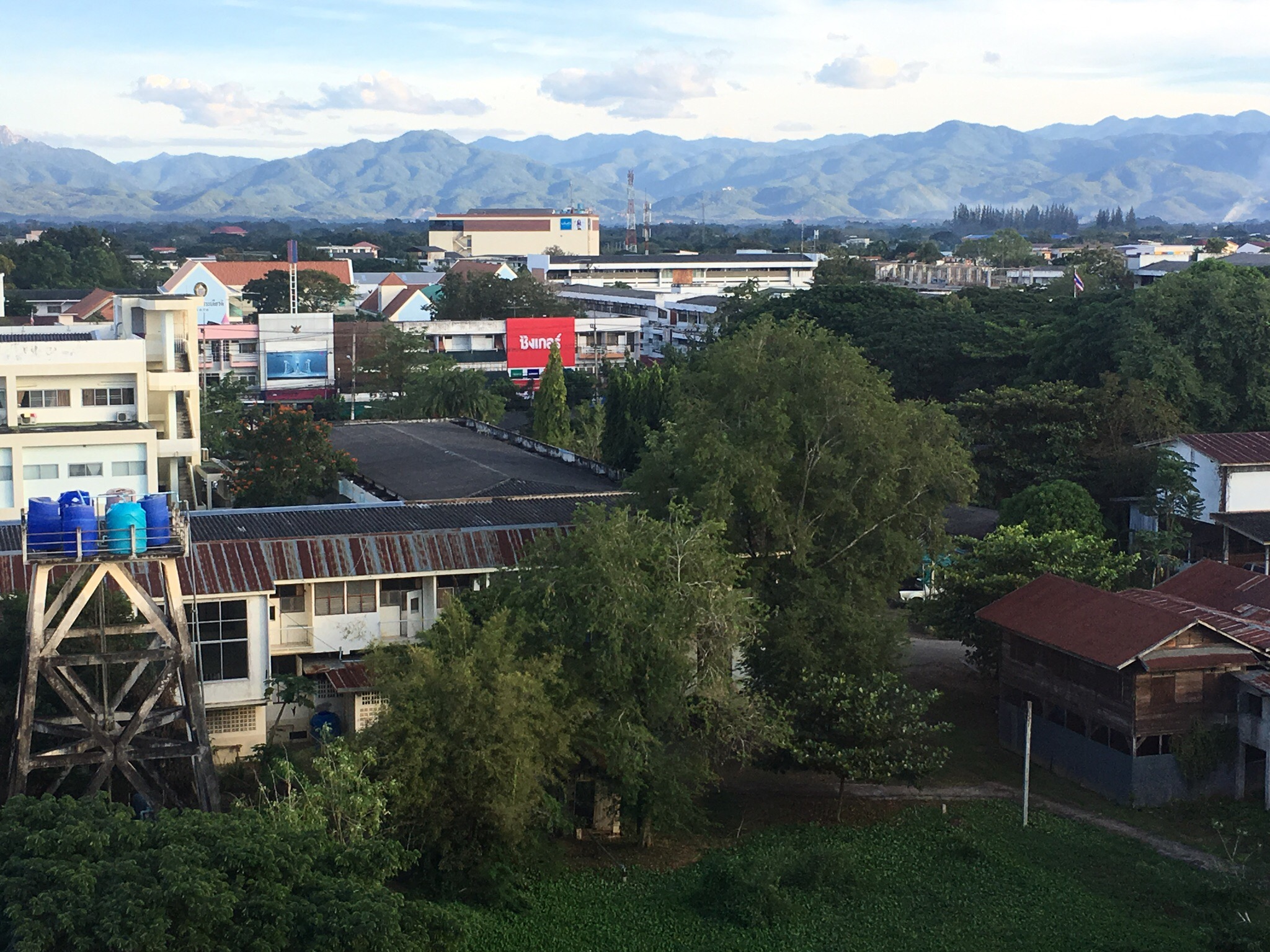
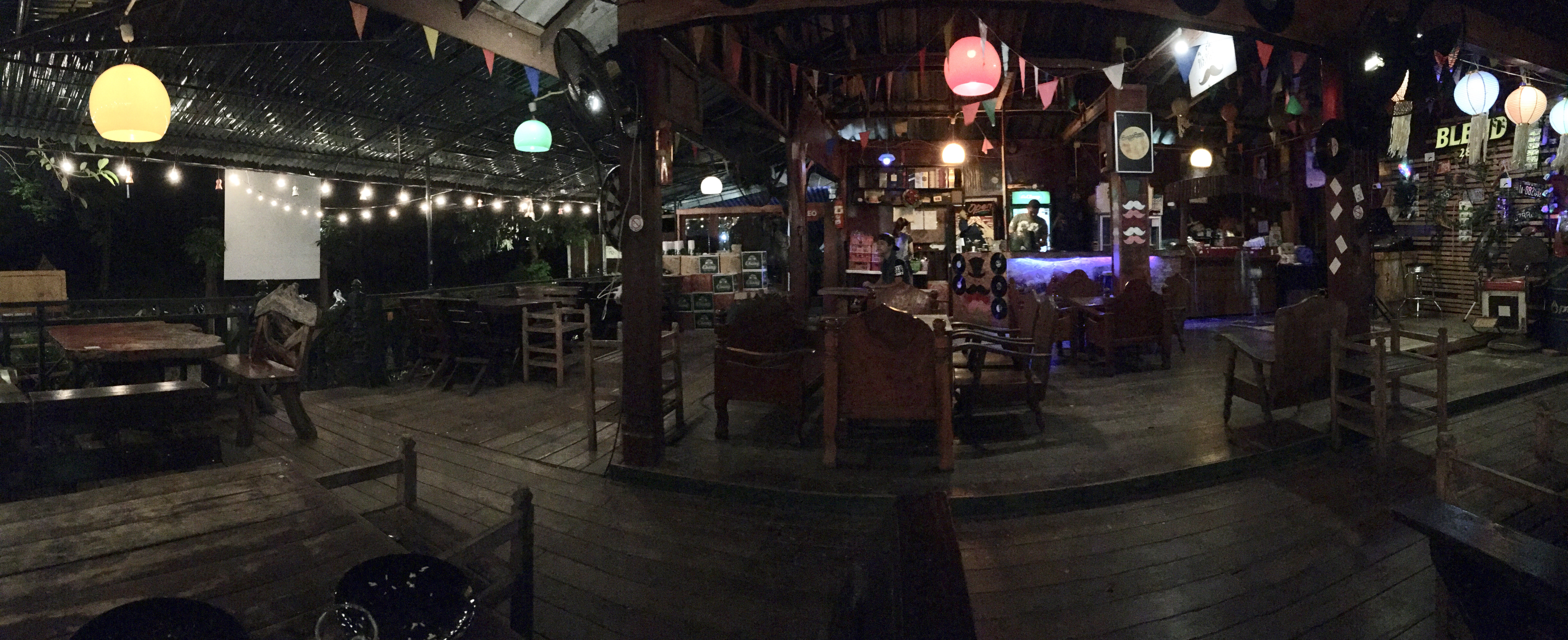
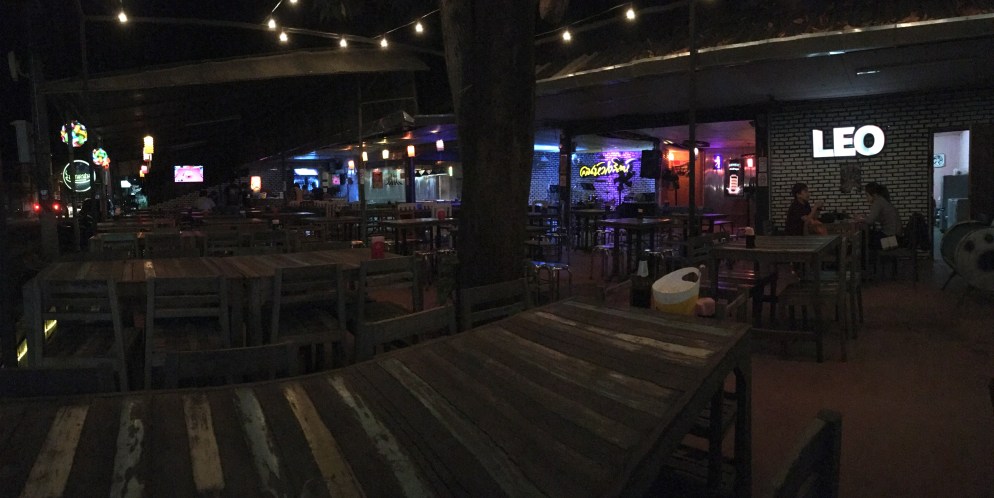
Great view from my 6th floor hotel room, overlooking the town of Phrae and the mountains to the east of the Phrae Basin.At 6pm I was the first customer at this restaurant/bar near my hotel. Hour later, I was still the only customer. But the food was good and the beer was cold!
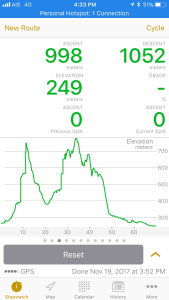
Wow, that was a lot harder than I thought! My plan for the day called for a ride of just 68 km, by far my shortest ride of the entire tour. What I did not realize at the planning stage, was that this route climbed over two mountain ridges and numerous other smaller ups and downs, resulting in a total of 998 vertical meters – doubling the climb of my next hardest day. The result is that today actually felt like my toughest day, rather than what I though would be my easiest day. Even though I got an early start of 7:45, I still arrived in late afternoon. But I made it! By reaching Nan, I have reached the ultimate goal of this tour. For me, Nan has always had the aura of an isolated and remote province. I initially though I would drive here. But when knee surgery last year forced my to quit running, I bought a bike, started cycling around Chiang Mai, then decided to cycle to Nan. My plans became increasing ambitious, resulting in this tour. I feel like the mountaineer who has reached a long sought summit: bone-tired, a little let down, and apprehensive about the decent – in my case the ride from here back to Chiang Mai. More on that below.
The ride out of the very quiet Chiang Muan valley began almost immediately, climbing to the first ridge in just over 12 kilometers. Just after reaching the crest of the ridge the road plummeted down to the The Baan Luang Valley. There I paused for a late morning cup of coffee, and stocked up on my water supply.
Dense jungle covered the high ridge northwest of Nan.
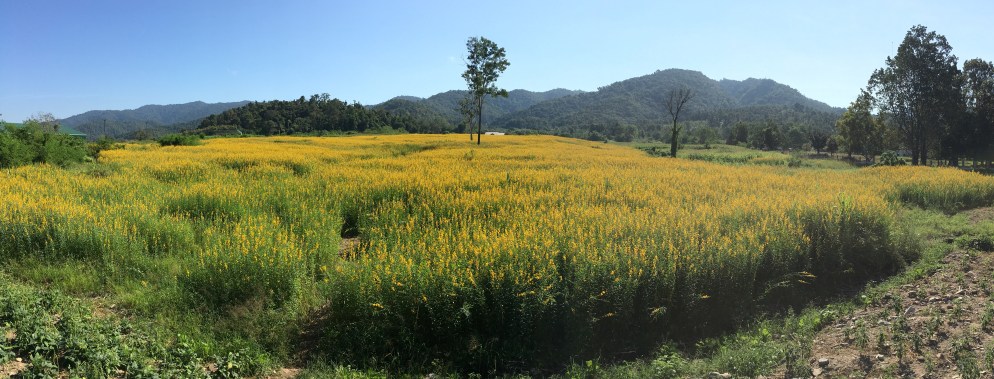
A panorama from the first high ridge east of Chiang Muan.
This sign at the small parking area on top of the highest ridge says no drugs, alcohol, and keep quiet. One wonders how many Chiang Muanians were conceived under the stars here.
A pretty good cup of Americano in Baan Luang
Just over half way to Nan from Chiang Muan, and I was knackered!
Then up I went again, this time very steeply, over a ridge covered in lush jungle. When I finally reached the ridge crest, it was mid-afternoon already, and quite hot. The way down to Nan from there was a series of roller-coaster hills where You go up 10 meters for every 15 You lose. To make matters a little more interesting, one of the steepest downhill sections was being reconstructed and I had to inch down through the mud made by a dust mitigating water truck. The mud caked between my tires and fenders bringing my rear wheel to a wheezing stop. Another 30 minutes was spend scrapping out the gooey mud so that my tire would spin again.
I finally arrived in Nan about 3:30 pm, some 3 hours later than expected. After checking in to the Baan Nan Hotel, I brought my bike to the Nan Cycling shop, and left it for them to clean up, and adjust the gears. They did a great job for only 250 baht.
Nan Cycling – highly recommended!
My after dinner snack in Nan.
I don’t have much to say about Nan. The idea of the place far surpassed the reality. Nui, the proprietor of Nan Cycling, was hard pressed to think of anything to see in Nan besides one museum and some temples. Perhaps interesting sites lie outside of town, but those will have to wait until I come back in a car.
Every mountaineer, when he or she reaches the summit of a remote, difficult and/or strenuous peak, knows well that the descent will be even more strenuous and difficult than the ascent, and potentially more hazardous. I am apprehensive about the final 3-day ride back home, my “descent”. Each day of the three is over 100 km in length and involves crossing at least one mountain range. I will spend tomorrow – well actually today as I write this – eating, getting laundry done, resting, eating and hydrating. Hopefully, I will be able to escape my “summit” very early Tuesday morning, bound for Phrae.
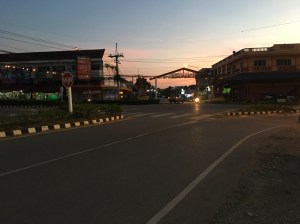
Chiang Muan doesn’t even have a traffic light. Lying half way between Phayao and Nan, tucked neatly in a basin surrounded by mountains, this small district within the Phayao Province has a population of just over 19,000 widely scattered over 723 square kilometers. The entire district consists of 3 small villages, with most of the population living in the surrounding rural areas.
Downtown Chiang Muan at sunset on a Saturday night.
I am staying in the largest of these villages which fortunately sports two small hotels. My first choice had a for sale sign hung on the office door, and no one was around. My second choice did not have a for sale sign, but also was deserted. Fortunately, the phone number on the sign worked and rustled up a gap-toothed local guy in a beat up pickup truck. He took my money and gave me a key, no passport, no sign in, no credit card. I love these small villages! The hotel (not sure it qualifies as a hotel with only 4 rooms) was actually very nice with a decent sized, clean room with a/c, hot water, twin beds, and a small refrigerator all for the princely sum of 500 baht (just over $15).
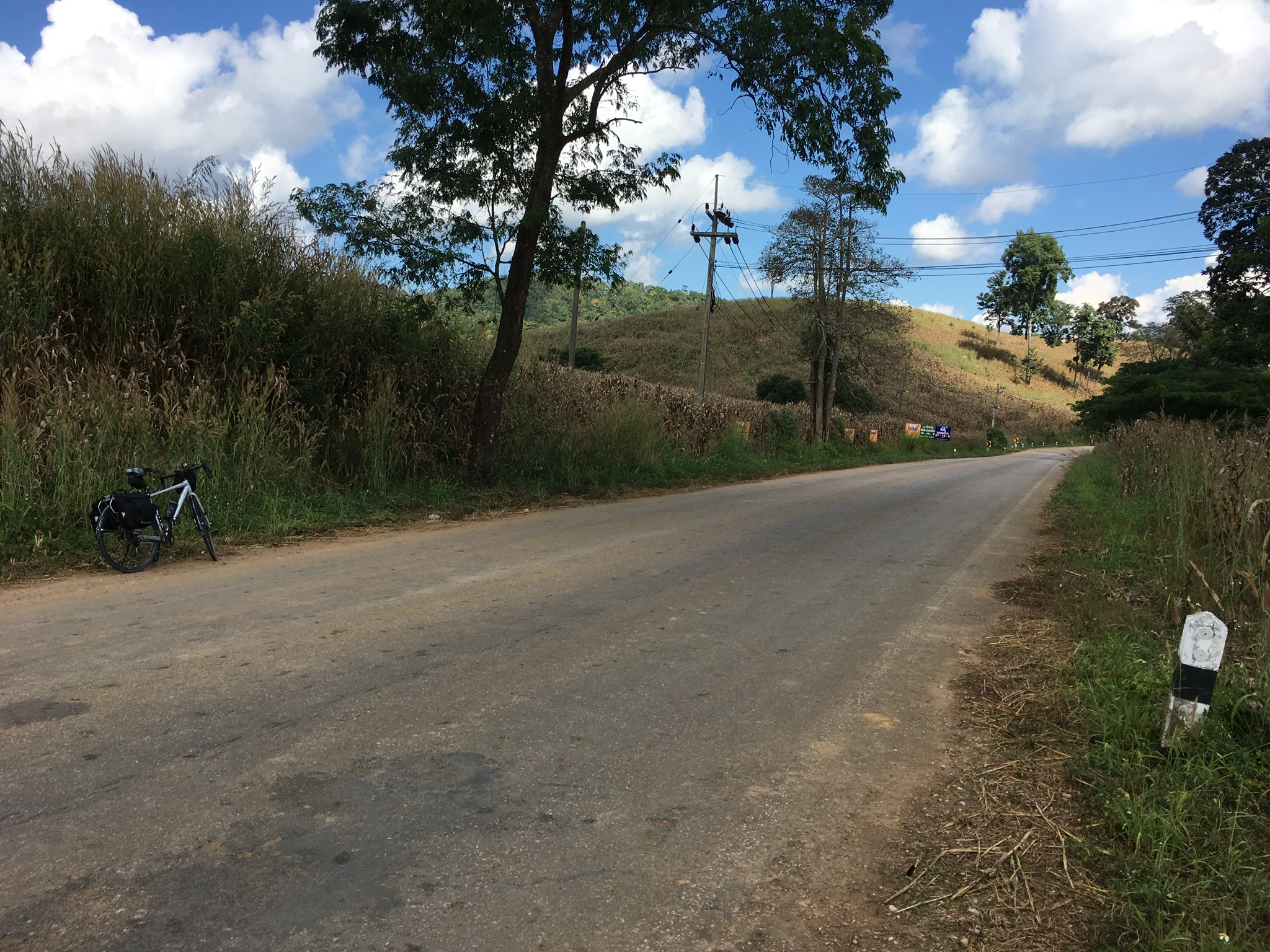
A deserted road – just how I like it.
Todays ride took me over one of the many branches of the Phi Pan Nam Mountains. Here the range is not particularly high, my high point for the day topped out at just under 700 m. All but the steepest slopes were covered with corn fields turned to the their post-harvest brown. The ride over the mountains was very peaceful, no traffic, no villages, and only the occasional farmer tending their fields and waving at the crazy man huffing and puffing up the hills.
Tomorrow I will reach the “summit” of my trip. I have always looked at Nan as being my ultimate destination. A shortish ride over another range of hills should get me there by early afternoon. Talk to you from there.
Today’s route from Phayao on left to Chiang Muan on the right.
The gentler slopes of the mountains were covered in brown cornfields.
Roly-poly hills greeted me after a fast 25 km on the plains south of Phayao.
The reward for a hard-days ride.
Lots of traditional stilted, teak houses in Chiang Muan
Wild Saturday night in Chiang Muan. Maybe it will be packed later?
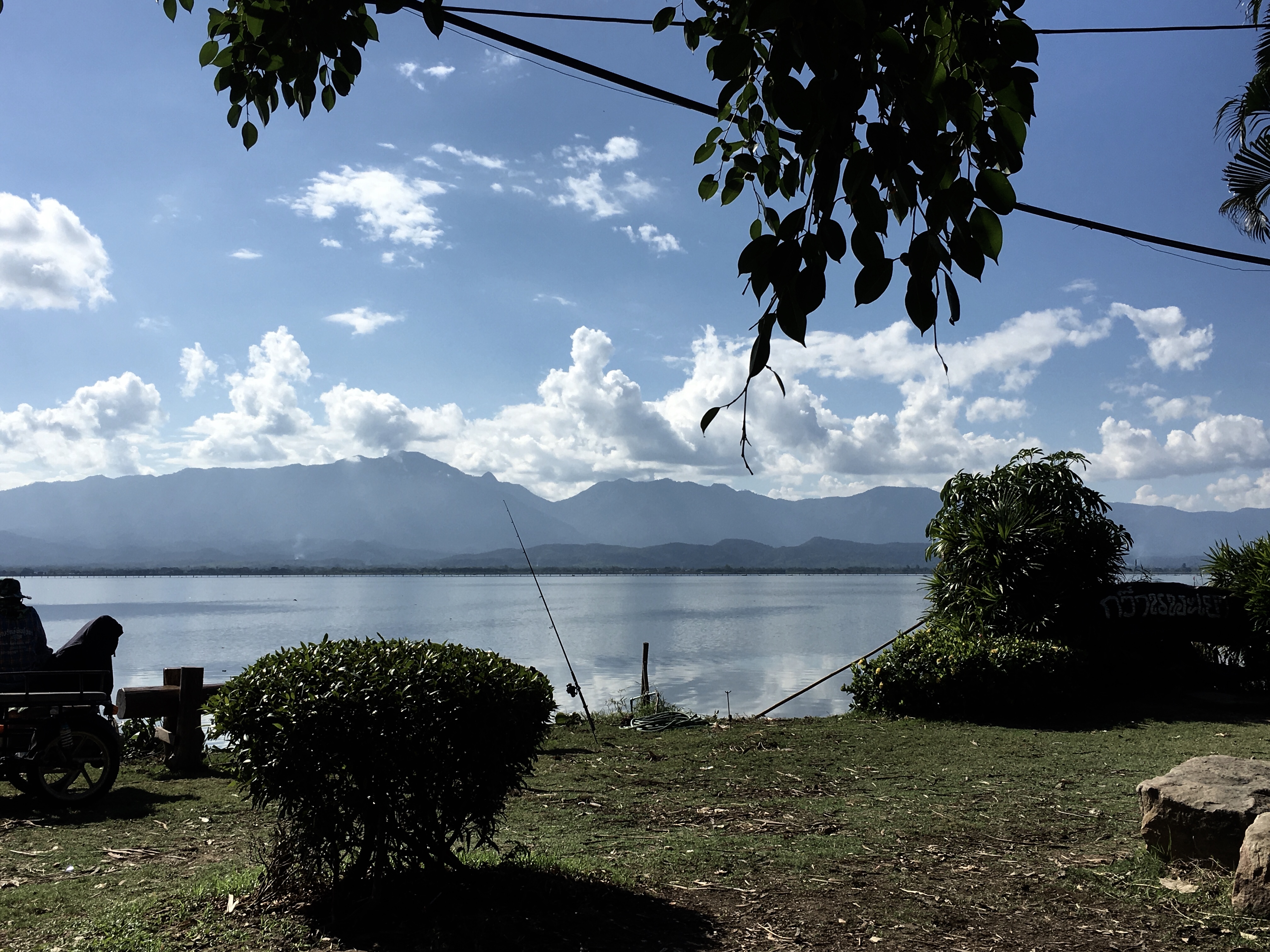
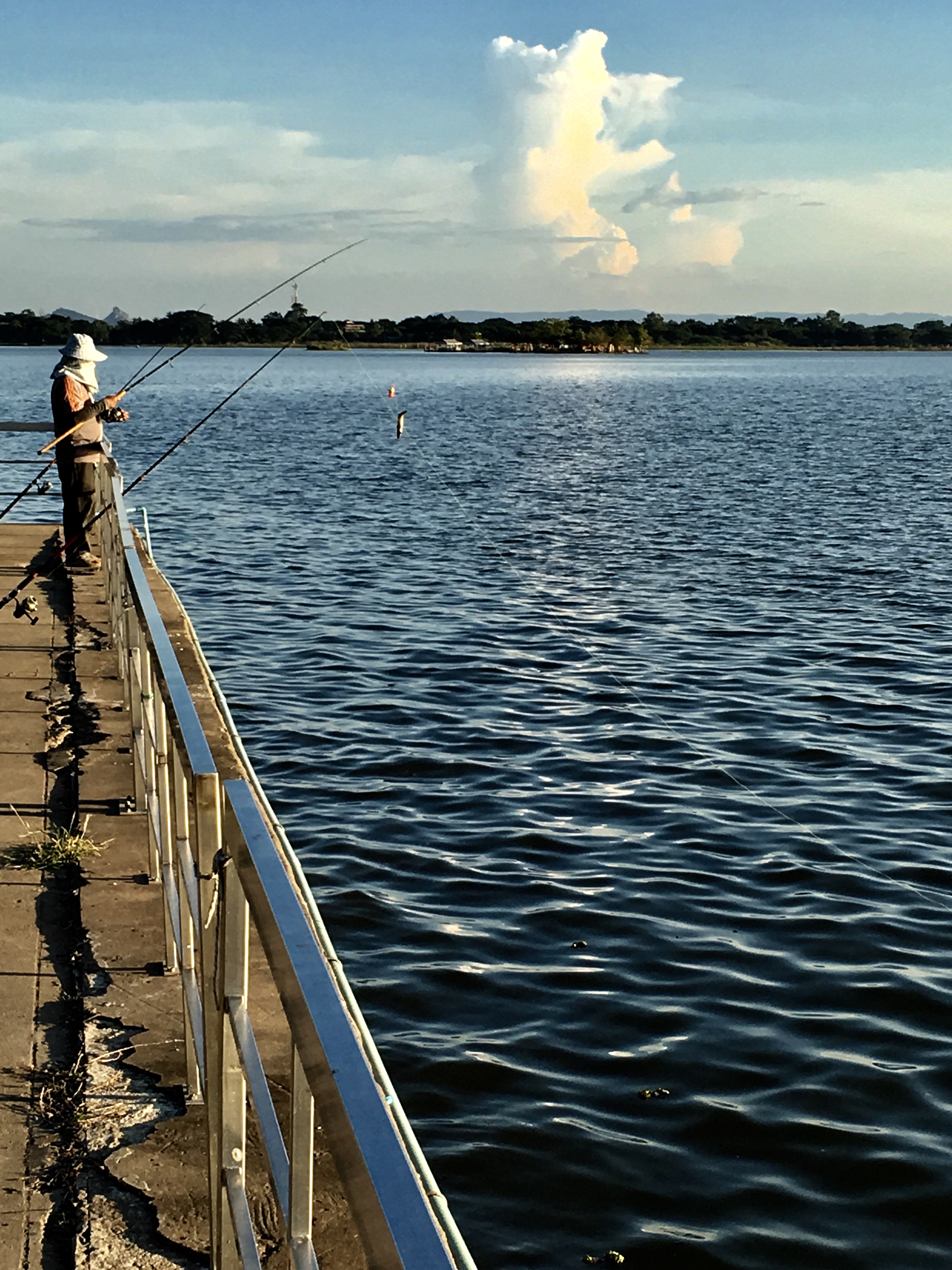
Today I cruised down 87 km southwestward to the provincial capital of Phayao, which lies on the shore of Kwan Phayao (Kwan = lake in Thai). Kwan Phayao is one of the few fresh water lake in Thailand, and one could argue that it is the remnant of a system of lakes that occupied the basins of northern Thailand 15 million years ago. During the last few million years, uplift affected all of northern Thailand, essentially draining the lakes as through-going, southward-flowing rivers developed in response to the uplift. It would have been a fantastic cycling trip in those ancient times, riding along lakes, up over mountains, and down to more lakes, with all kinds of weird Miocene mammals around like camels and small horses to chase instead of the semi-feral dogs of the Holocene.
Phayao is a pleasant, clean town but with a vastly underutilized lake front. They do have a small promenade, with a fountain and small park, but with such a fantastic view across the lake to the distant mountains, one would expect them to leverage this into a popular tourist attraction. However, the lake-front pubs and restaurants seem to be mainly populated with locals. I get the impression that Thais see so much water their whole lives that they can’t quite wrap their heads around why us westerners like to look out over water.
The ride today was uneventful. No spills or thrills, just a fast ride on smooth roads through lovely heartland. I will let the pictures do most of the talking:
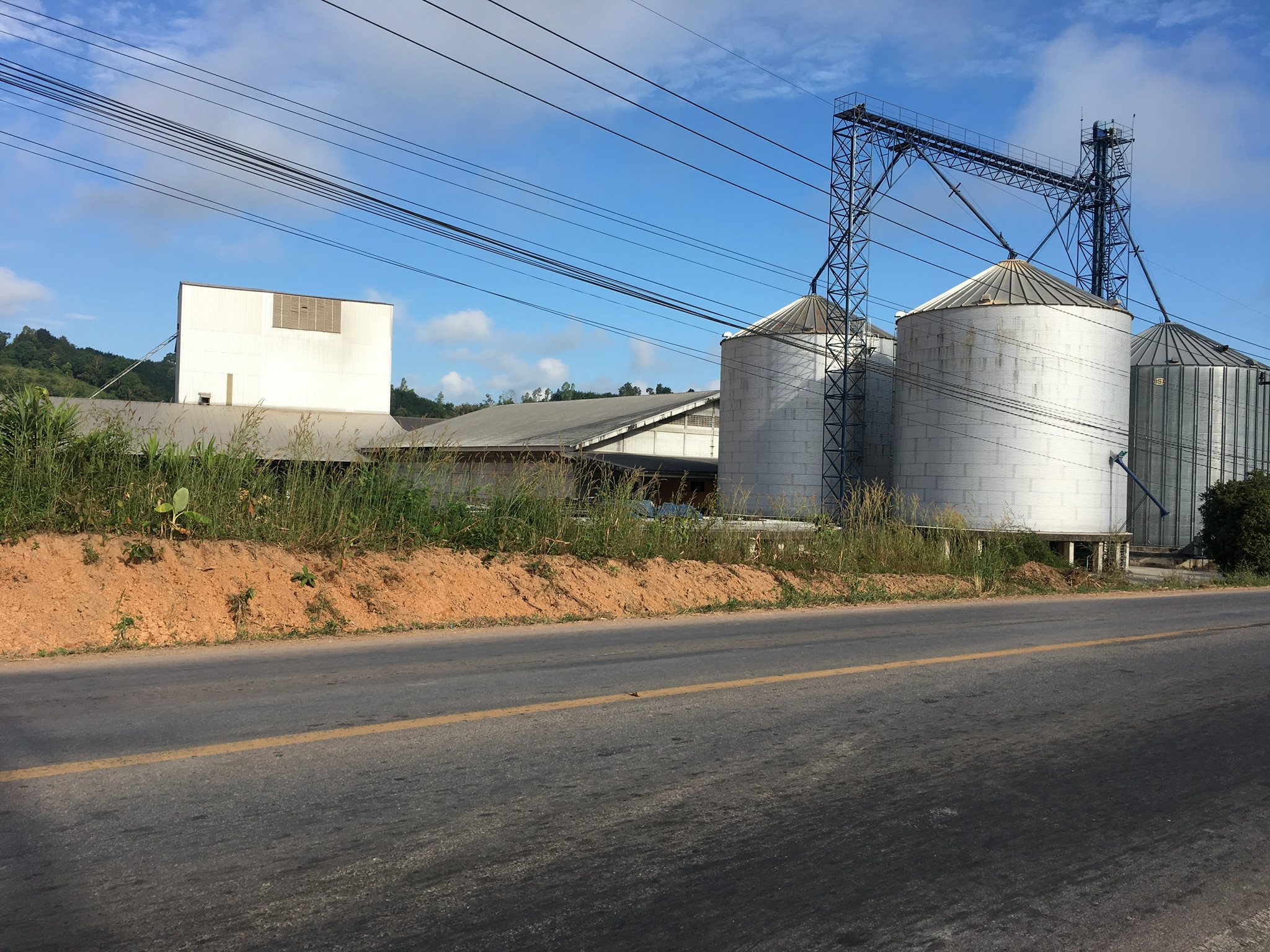
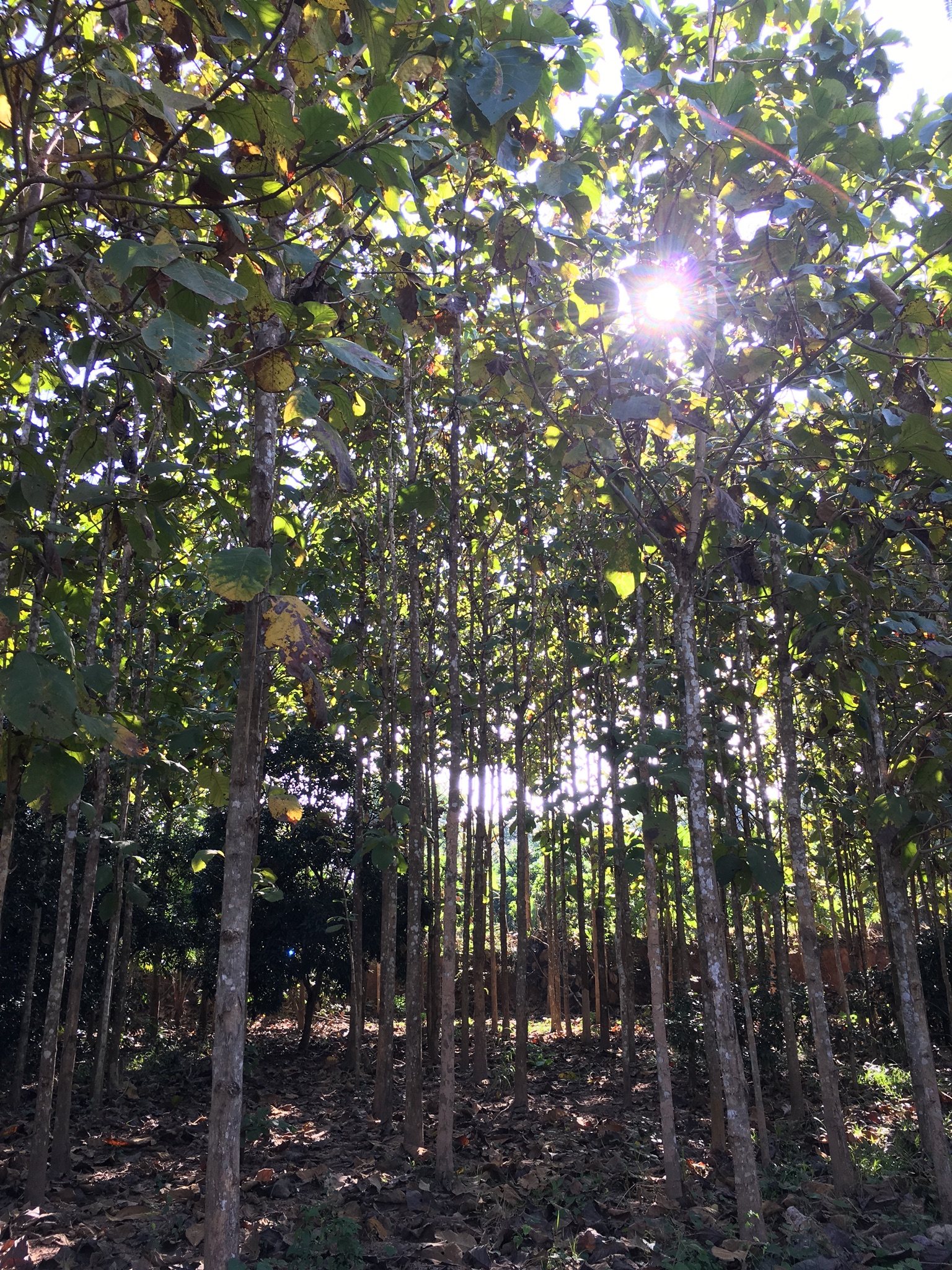
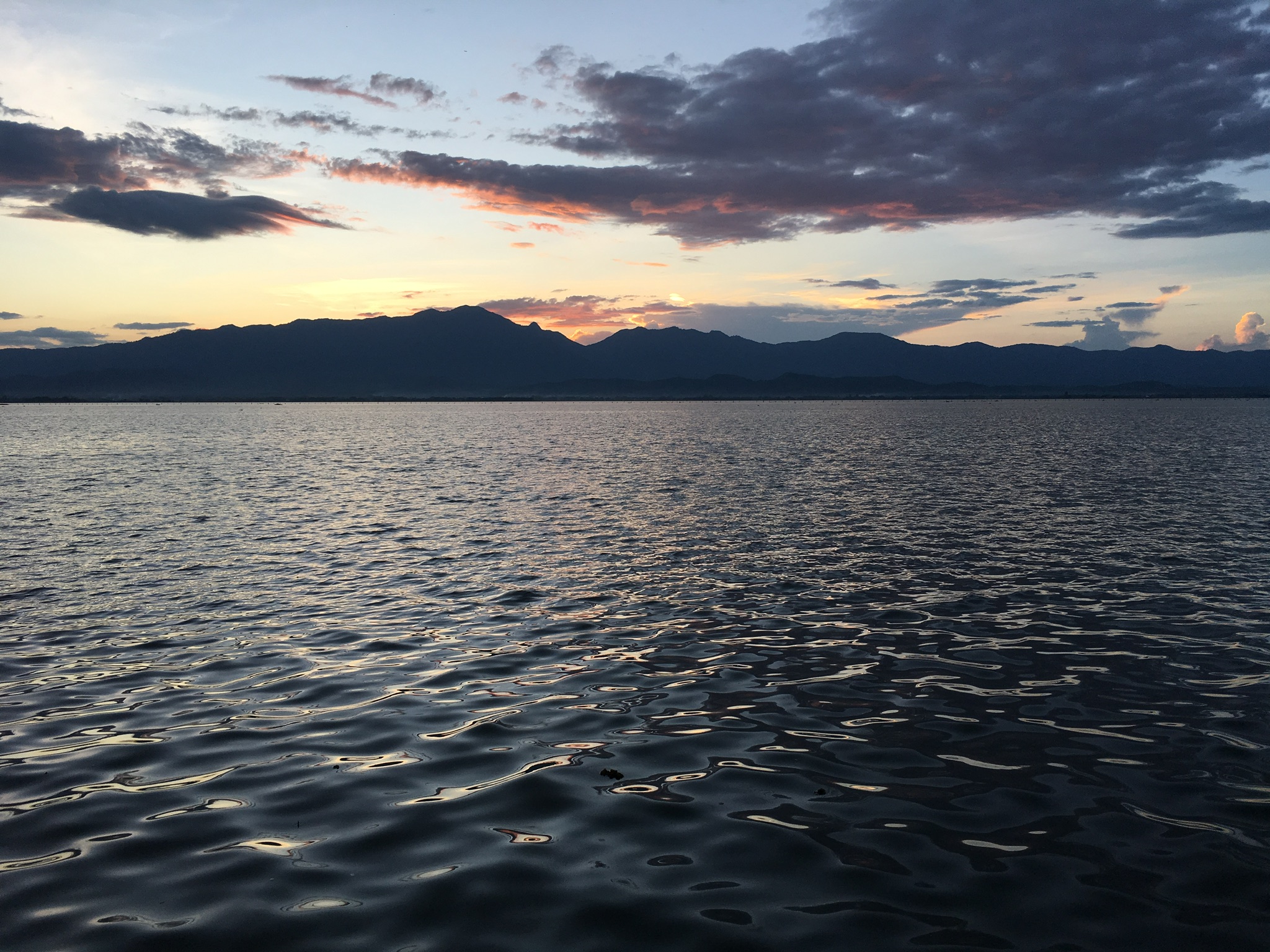
Corn er.. I mean rice silos are a common site in north-central ThailandYoung teak trees (at least that’s what I think they are).Even the weeds are nice.Never tired of the golden rice paddies.Stopped to pee and I had a captive audience!Phayao LakeFishing!A peaceful end to the day.
Tomorrow begins the final 2-day push over the mountains to Nan.
Nevada and it’s neighbors lie in North America’s Basin and Range Province, made
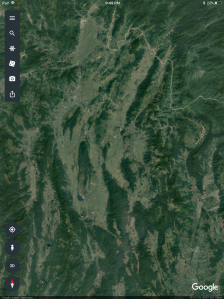
A google-eyed view of the Northern Thailand Basin and Range
famous in John McPhee Pulitzer Prize nominated book of the same name. Have a look at any map of this region and the mountain ranges on the map look like a swarm of worms fleeing Mexico for Canada. A look at a map of Northern Thailand shows a similar pattern of twisted worms headed for Myanmar and Laos, albeit at a smaller scale. Like in Nevada, the Thai Basin and Range formed by stretching of the earths crust resulting in down-dropped basins, and up-thrown ranges. Today I rode along the edge of one of these worms, southward along the eastern edge of the Chiang Khong Basin. Mostly 4 lanes, but with very little traffic, the road gently rolled along the edge of the mountains. Today was supposed to be an easy day, only about 77 km, but after yesterday’s 119 km marathon, and with bright sun, a hot headwind, and gently rolling hills, It did not feel so easy.
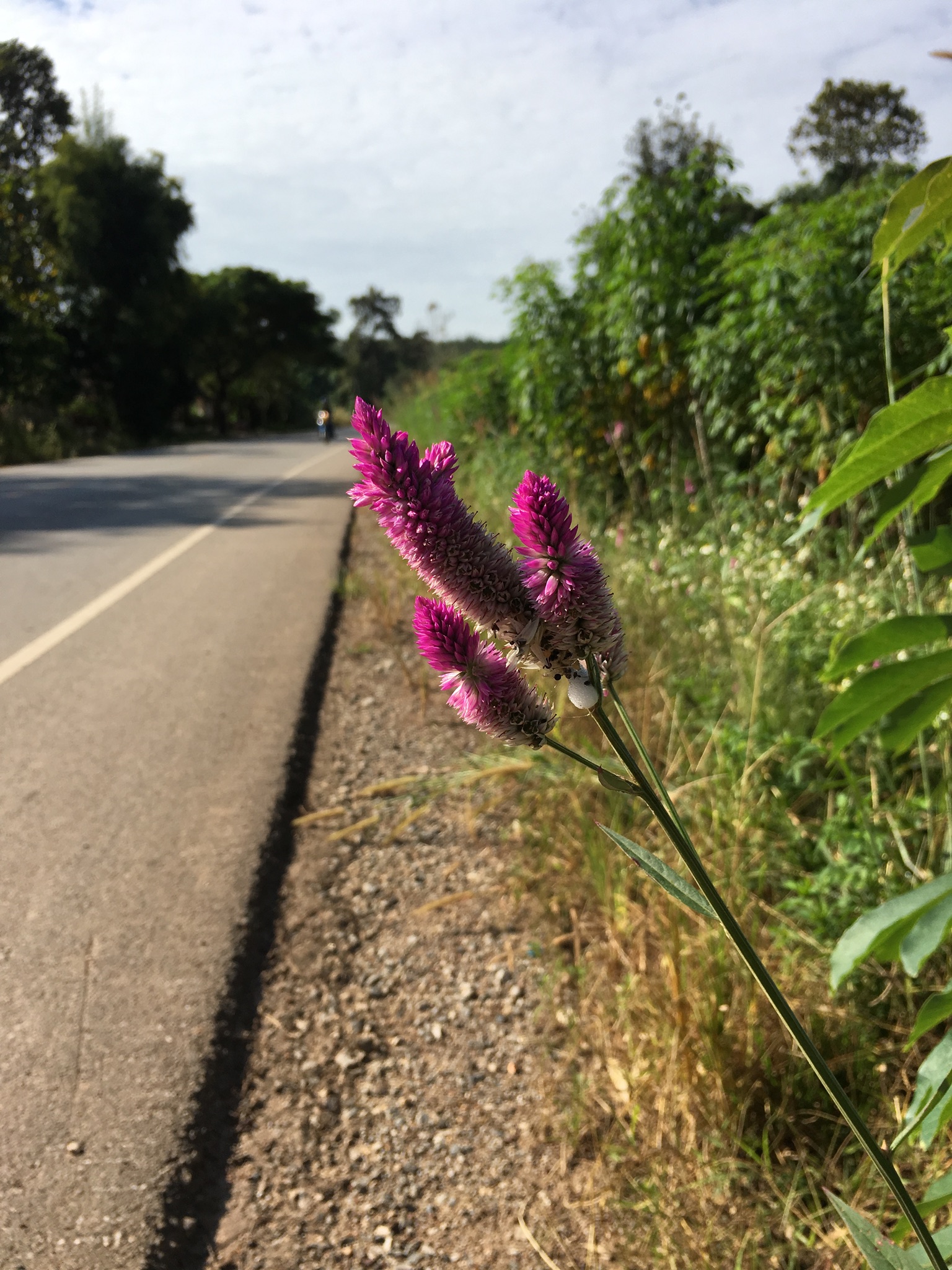
Blooming India hemp. These used to be classified as weeds but are now finding many uses such as a soil decontaminant and even as a source of biofuel.
I had my first accident today. I was riding slowly up one of the hills, with my feet firmly clipped into the pedals, when I spotted a view suitable for a photo. I swerved off the road into a small driveway, but as I rolled to a stop, my toe clips picked a bad time not to release. With both toes locked to the pedals I did an inevitable, slow-motion fall onto my hip and elbow. Fortunately, I suffered no injuries save a badly bruised ego. Could have been far worse – there could have been an audience.
The all-purpose I-taen.
I-taens have removable engines designed to be multi-purpose.
Gotta love the fake headlights
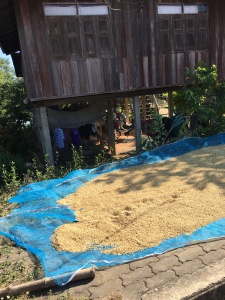
The Chiang Khong Basin is agricultural heartland. Rice silos lined the road, and it seemed every flat spot was taken up by harvested rice drying in the sun. Rice in Thailand is still mostly harvested by hand, threshed by small portable machines, then laid out to dry on any available surface. The drying reduces the moisture in the rice grains, making them much less susceptible to mold or insect infestation while being stored.
A classic wooden Thai house with the rice crop drying in front.
You also know you’re in true farmland when the i-taens (pictured above) outnumber pick-up trucks. These Thai-made, colorfully decorated, all-purpose vehicles are used to haul just about anything from pigs to people to rice at a chug-chug-chug 20 km per hour. They are powered by a 9 hp diesel engine that can easily be removed to power a water pump or field plow. Today I had to dodge a few of these chug-a-lugging up the wrong side of the road.
I rode into Thoeng about 2:30 pm. It took me about 1 minute to ride out of Thoeng. Not much here (but it does have two seven-11s about 300 m apart). I had a 2 km ride out of town to find my hotel, a newish concrete block structure. Cheap and clean though. For dinner I had to ride back into Thoeng where I completed a complete tour in about 5 minutes. Outside of push carts, I only found one restaurant-cum-bar, easily spotted by the large Chang beer sign. The food was pretty awful, and I rarely say that about Thai food, but the beer was icy cold, served in a very frosty mug. I ordered a Singha beer much to the disapproval of the waitress wearing the Chang beer dress. She probably missed out on a small commission. I made up for it with a tip which was greeted by braces-filled smile.
Tomorrow I head southeast to Phayao, a lakeside provincial capital that promises to be more interesting than Thoeng. I will try to get there early tomorrow, talk to you then.
Nearly 6 pm now and I am sitting in the “Bike and Drink” bar in Chiang Khong on the banks of the mighty Mekong River. That is bike as in bicycle – so of course I had to stop. Good decision. They have good American style pale ale (albeit from New Zealand) and they are playing Hotel California!
Chiang Khong long stood as the gateway to Laos from this part of Thailand – just a ferry ride across the Mekong. However, not too long ago the opening of a new “Friendship” bridge across the Mekong a few kilometers south of town caused an economic slow down. Still it’s a pleasant one-road town. Backpacker’s hostels, restaurants, and bars line the main drag, and the town sports the friendly ambiance of a town far, far from Bangkok. Enough about Chiang Khong though, let’s catch up.
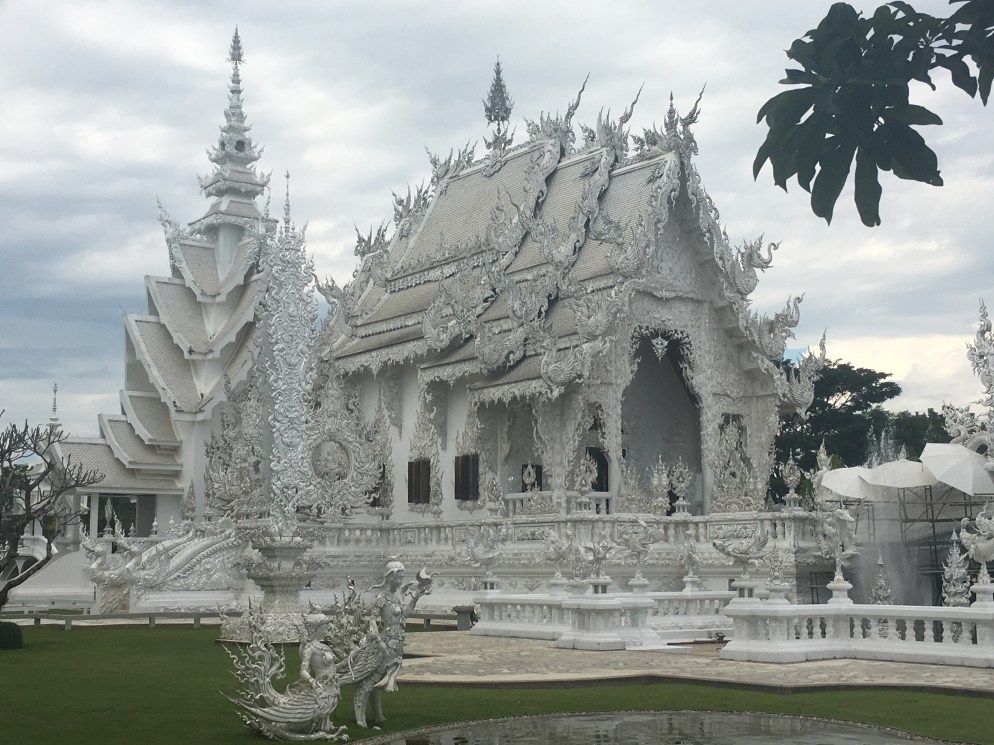
My rest day in Chiang Rai turned into 3 rest days. I gained one day when I pushed through to Chiang Rai without stopping at Mae Chan. I gained a second rest day when my friends, who drove up from Chiang Mai to play golf and celebrate a birthday, talked me into staying another day to play golf and celebrate a second night. At first I said no, but then I remembered. I am retired, I can do whatever I want. So I stayed. On the first rest day I did cycle 14 km out to Wat Rong Kuhn aka the White Temple.
Wat Rong Khun
While the structure is impressive, the site is a tourist trap with hundreds of Chinese tourists milling about. I had a smoothie and a coffee and cycled back. It was however good to warm up my slightly sore legs after the long day coming from Fang.
I won’t say much about my stay in Chiang Rai – to borrow a phrase, what happens in Chiang Rai stays in Chiang Rai. Suffice it to say that my stay involved a lot of eating and a lot of drinking. Chiang Rai is the poor man’s Las Vegas for us – not because it in anyway resembles the real LV, but because it is not Chiang Mai, our home town where we (mostly) try to behave ourselves. By the time I saddled up my bike this morning, I was feeling quite sluggish and bloated.
I was up early though, and hit the road a little after 7 am – no breakfast, but I still felt full so that was just fine with me. The ride out of town followed the Mae Kok River to the northwest. Although into a slight headwind, the route was flat and fairly fast. A bit further northeast, the route abandoned the river and meandered through
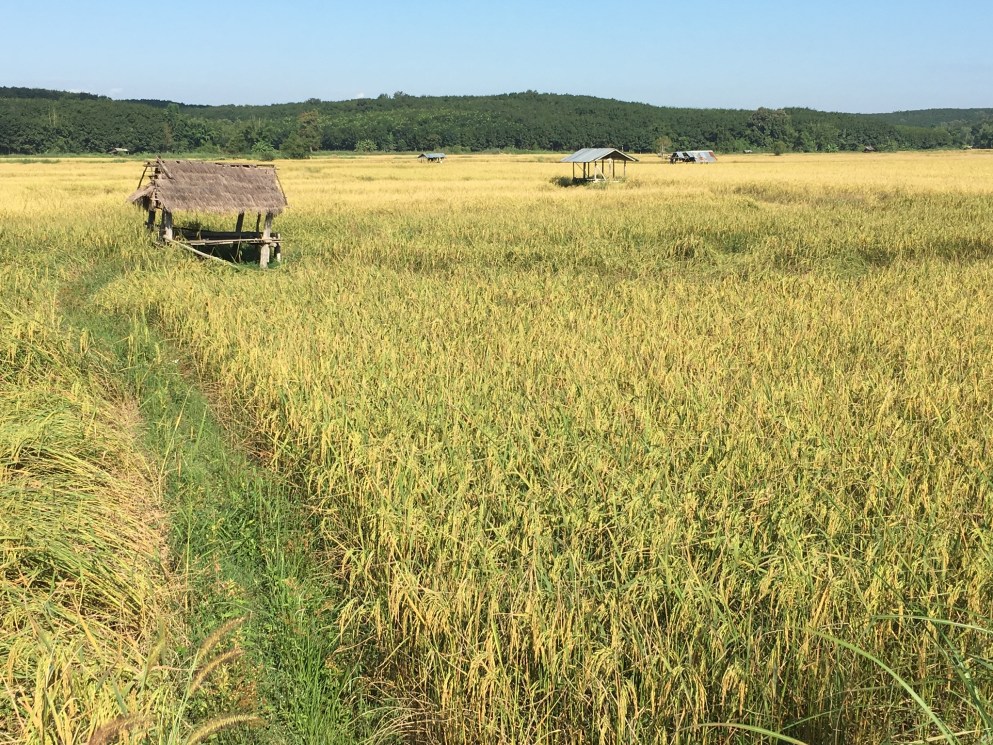
Rice fields with rubber plantations in the distance.
golden plains of ripe rice paddies and low hills covered with lush rubber plantations. Finally, 45 km and 2 hours out of town, I was hungry. Just in time, I came upon that ubiquitous institution that is as much a part of Thailand as red and gold
White sap gets collected from these rubber trees and is processed into black rubber.
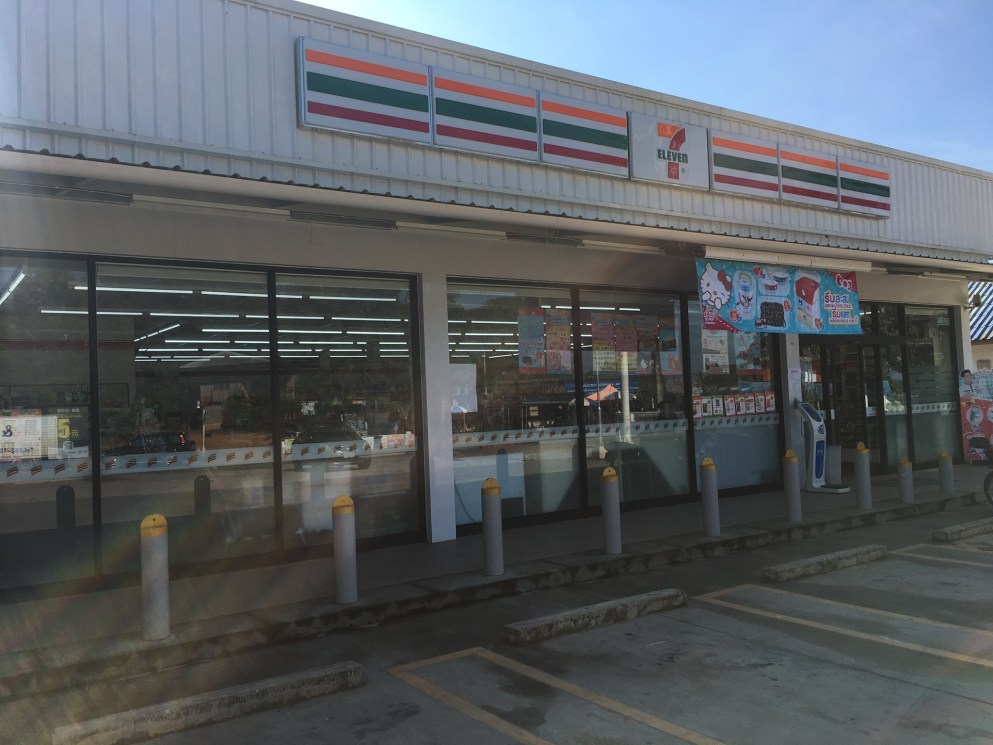
temples and fiery papaya salad: a 7-eleven. If you have never been to Thailand, you would never believe how many 7-elevens are here. In cities there can be 3 or 4 of them in the same block. I have seen two of them across the street from each other. Some are the size of a small suburban kitchen, others are USA-sized. They are everywhere. Until you go up country. For a village in Thailand, I suspect getting a 7-eleven ranks just behind running water and electricity in the measure of progress. The branch I encountered looked brand-spanking new, with shelves fully stocked with everything that will make the Thais just as fat as Americans. I had my gourmet brunch of nuked ham and cheese croissants and cookies, washed down with a coke while sitting on their front step.
My breakfast stop today.
I continued cycling northwestward until I reached the Mekong River. The main road to Chiang Khong diverges from the river and crosses the Phi Pan Nam mountains, a more direct route. I chose to follow the Mekong on a smaller road where the river wraps northward, eventually cutting directly through the mountains as an antecedent stream (nerd alert).
The Mekong
The Mekong existed before the uplift the mountains, and as uplift proceeded, the erosive power of the river out-paced the rising mountains such that the river now cuts east-west through the north-south ridges of the Phi Pan Nam range. Unfortunately, the road did not stay down along the river, but rather rose and fell, constantly hugging the shoulder of the mountains to the south.
Finally about 100 km out from Chiang Rai, I rounded the bend in the river for what I hoped was a smooth run into Chiang Khong. No such luck. The last 20 km wound over even high ridges, and to make it worse, the road was being widened, resulting in several kilometers of cycling up and down steep grades on what amounted to a dusty dirt road. By the time I cruised into town, I was sunburned, dehydrated, and just plain beat. I stopped at the first hotel I saw – a very small room spartanly furnished, but it cost only 400 baht (just over $12). Good enough, and after a shower I was sound a sleep. Woke up an hour later, and here I am sipping my second beer and munching on Lays. Off to find a proper dinner somewhere. Talk to you tomorrow from my next stop, Thoeng.
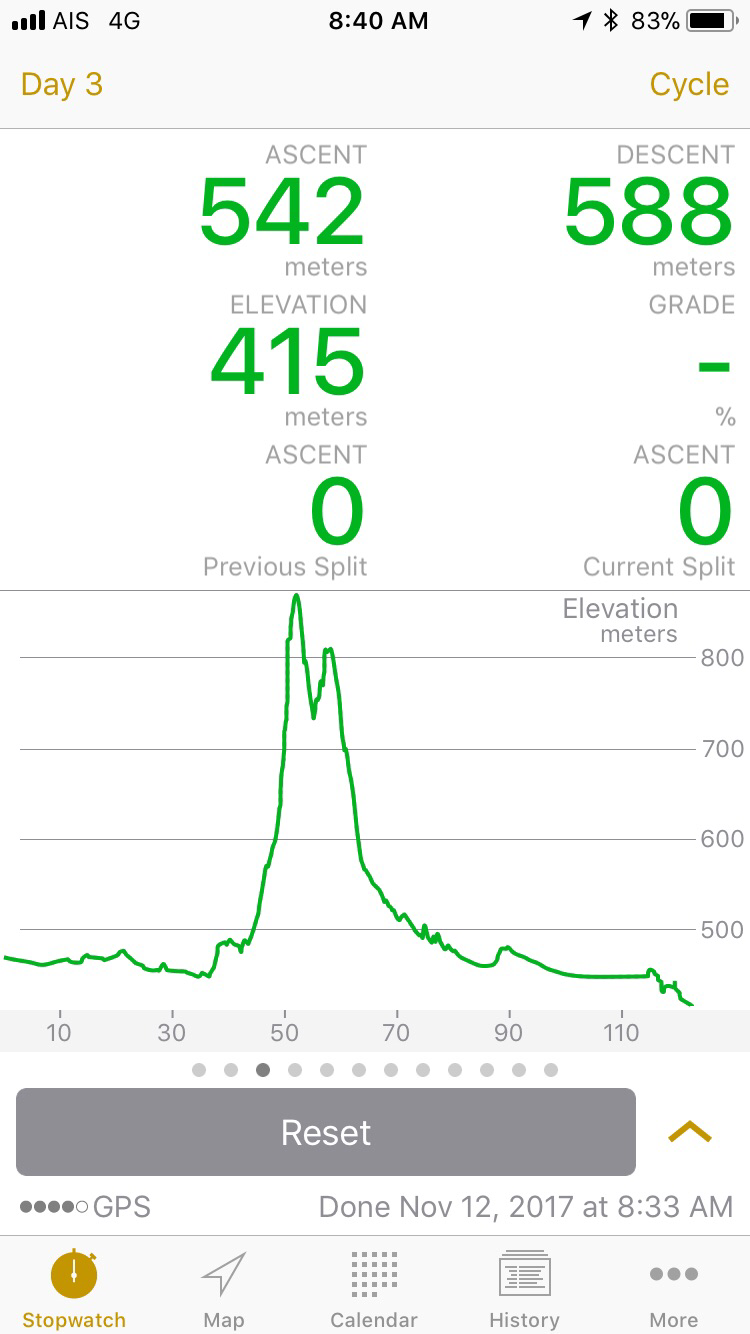
This distance versus elevation plot shows the story of today’s ride.
The pictured graph – generated by my Cyclometer app on my iPhone, tells the story of today. A long flat fast approach, a steep, steep, steep climb, then a long run-out downhill, finishing with a fast southward wind-at-my-back race down to Chiang Rai. Today I only intended to go as far as Mae Chan, a town about 30 km north of Chiang Rai, leaving an easy 30 km for the next day, but I arrived at Mae Chan at 2 pm with plenty of energy. So I just kept going. November 13 was a planned rest day in Chiang Rai, several friends are driving up here from Chiang Mai to celebrate a friend’s 60th birthday, so I timed my rest day to coincide. Having arrived a day early, I now have 2 rest days!
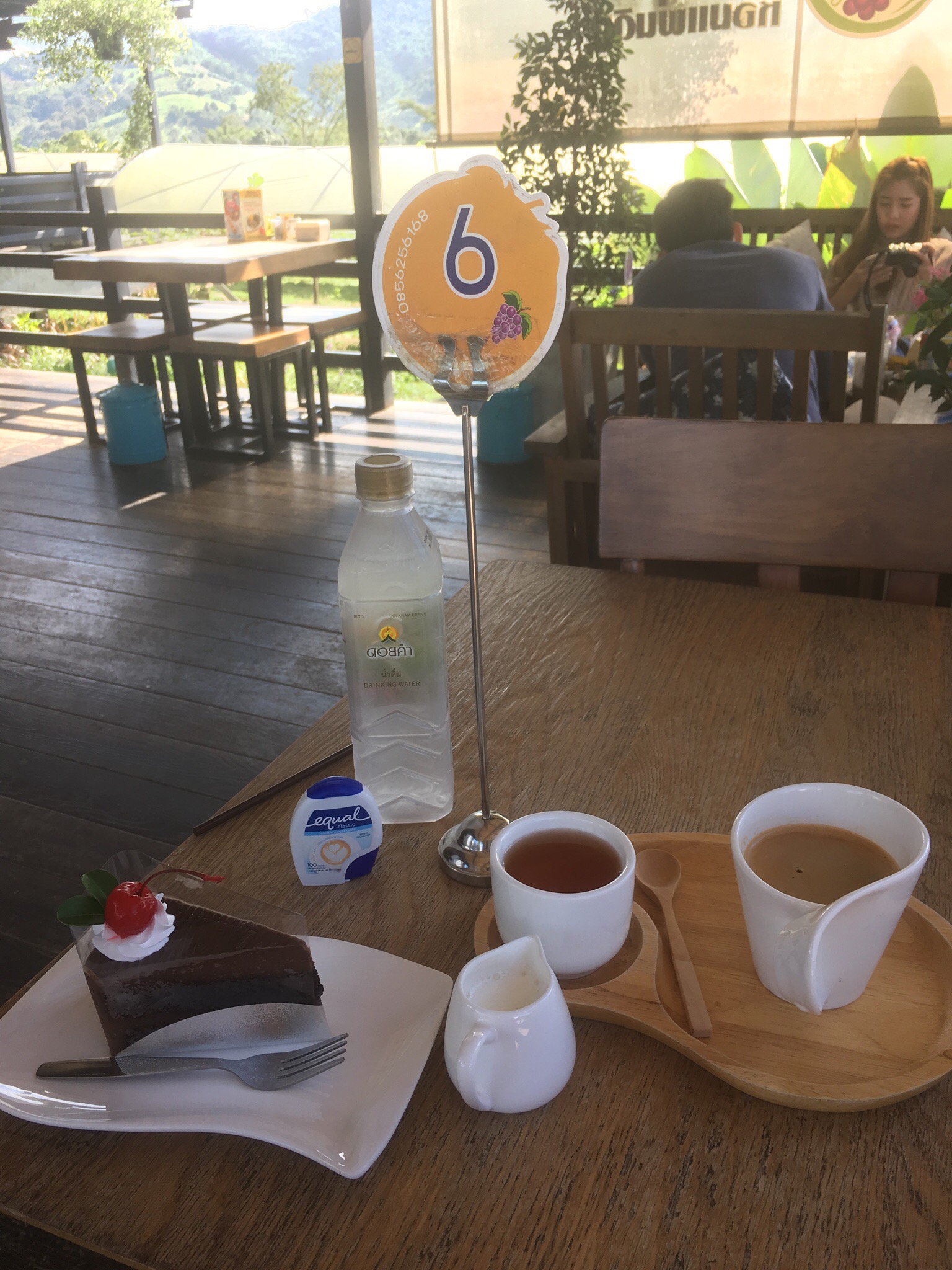
This morning, after breakfast at the hotel, I rode northeastward on the main road through green, ripe rice paddies and scattered orchards with the northern mountains looming on the horizon. I stopped for a cup of coffee and a tasty chocolate cake about 35 km out at the Hom Pan Din Coffee and Bakery.
Fuel for the climb.
Interestingly they also have a small vineyard and they sell locally made wine, raisins and grape jam in their small gift shop. I skipped the wine and headed east. The climb to the pass was short and brutally steep – but I managed to avoid embarrassment and gutted it out without having to dismount. At the high pass I was greeted by a tropical deluge. I sought shelter under the eave of a storage building as a stream of school children, apparently headed home from school for lunch, frolicked in the rain and gawked at the crazy farang1 with the weird shorts. The rain persisted, although I could see blue sky beckoning toward me from the east. Finally I pushed on despite the rain, becoming completely soaked within 30 seconds.
A short distance east of the summit, still in the downpour, I passed the turnoff towards the north to Mae Salong. Mae Salong is a very strange village built along the crest of one of the highest ridges in the northern mountains. The ethnic Chinese that populate this region are the descendants of a remnant of Chiang Kaishek’s anticommunist army. When General Chiang retreated to Taiwan, a couple of regiments of his army became separated in southern China. They refused to surrender and continued the fight, eventually retreating to northern Burma. The Burmese were not welcoming. Fortunately for these lost soldiers, the ever pragmatic Thais, involved with their own war against the communists, invited these rebels turned mercenaries to fight for Thailand in exchange for Thai citizenship. In order to finance the war, the new Thai citizens turned to opium and the drug trade – the beginnings of the famous Golden Triangle. Tea and tourism have since replaced opium in the economy of this now peaceful village. I would say these soldiers did pretty good for themselves. My original plan called for me to cycle up to Mae Salong, but fortunately I had the opportunity to visit Mae Salong by car a few weeks ago. My car barely made it up the mountain, trying to cycle up there would have been a disaster!
The deluge gave way to sunshine and badly needed warmth as I raced down the hill toward the east. For nearly 30 km I barely had to pedal. This section of road follows the linear Mae Chan Valley – linear because it marks the long east-west-trending Mae Chan fault – an active strike-slip fault, like the San Andreas Fault’s little brother. Fortunately, no temblors today.
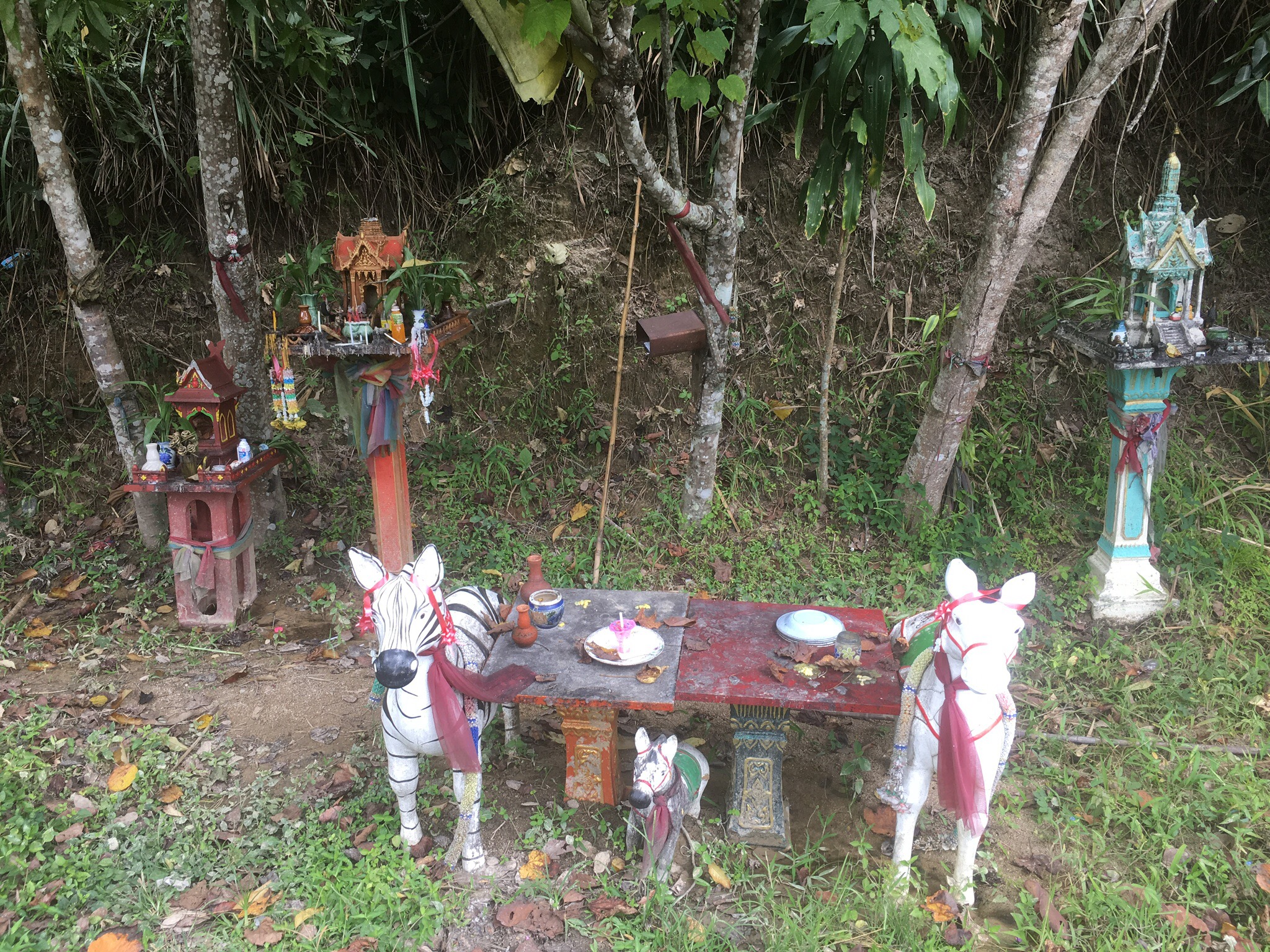
Typical Road-side shrine. Note the offerings of food left for the spirits.
Spirit Houses
Small road-side shrines commonly mark particularly windy and/or mountainous stretches of highway in Thailand. A varying number of spirit houses, mailbox-sized mini-temples sitting on low pedestals commonly accompany these shrines. My understanding is that relatives of car/motorcycle casualties place the spirit houses near to the accident sites so that their ghosts have a place to live close to where they became separated from their hosts. I am hoping that my spirit does not wind up in one of these anytime soon.
I cruised into Chiang Rai about 4:30 pm, checked-in, and had a short rest before heading out to feed my starving belly.
A “San Fran” cheeseburger, the real reason I skipped Mae Chan and continued to Chiang Rai
I will spend the next 2 days in Chiang Rai to celebrate my friend Scot’s birthday and play a round of golf (thanks to Scot for bringing up my clubs!). I will need the additional rest because the next segment of my tour calls for a 117 km leg up to the Mekong River.
1 The word farang is used by Thais to refer to persons of European descent.
I’m sitting in a bar/restaurant (mostly bar) writing on my iPhone while sipping a Singha beer and waiting for my dinner to come. After checking in to the Sleeping Tree Hotel in Fang, I took an hour-long rest before heading out on a mission. The mission was find a beer and food. Harder than I thought. Turns out this town has many restaurants that have food and no beer, and many bars with with dodgy food or no food at all. I ended up choosing the latter of course. I’m now at the “Mahanakornfang” which roughly translates as “BigimportantcityofFang”. The place is just beginning to fill up, my guess it’s pretty popular on Friday night. I’ll be in bed by the time things heat up here. But back to the start…
This morning I was up by 7:00 and saddled up by 7:30. No breakfast here. So I headed north towards the town of Phrao. Turns out the Phrao Basin is not really flat. A 1 km hill greeted me almost immediately. Not steep, but it still worked as good as coffee to wake me up and get me in a lather. I arrived in Phrao about 45 min later.
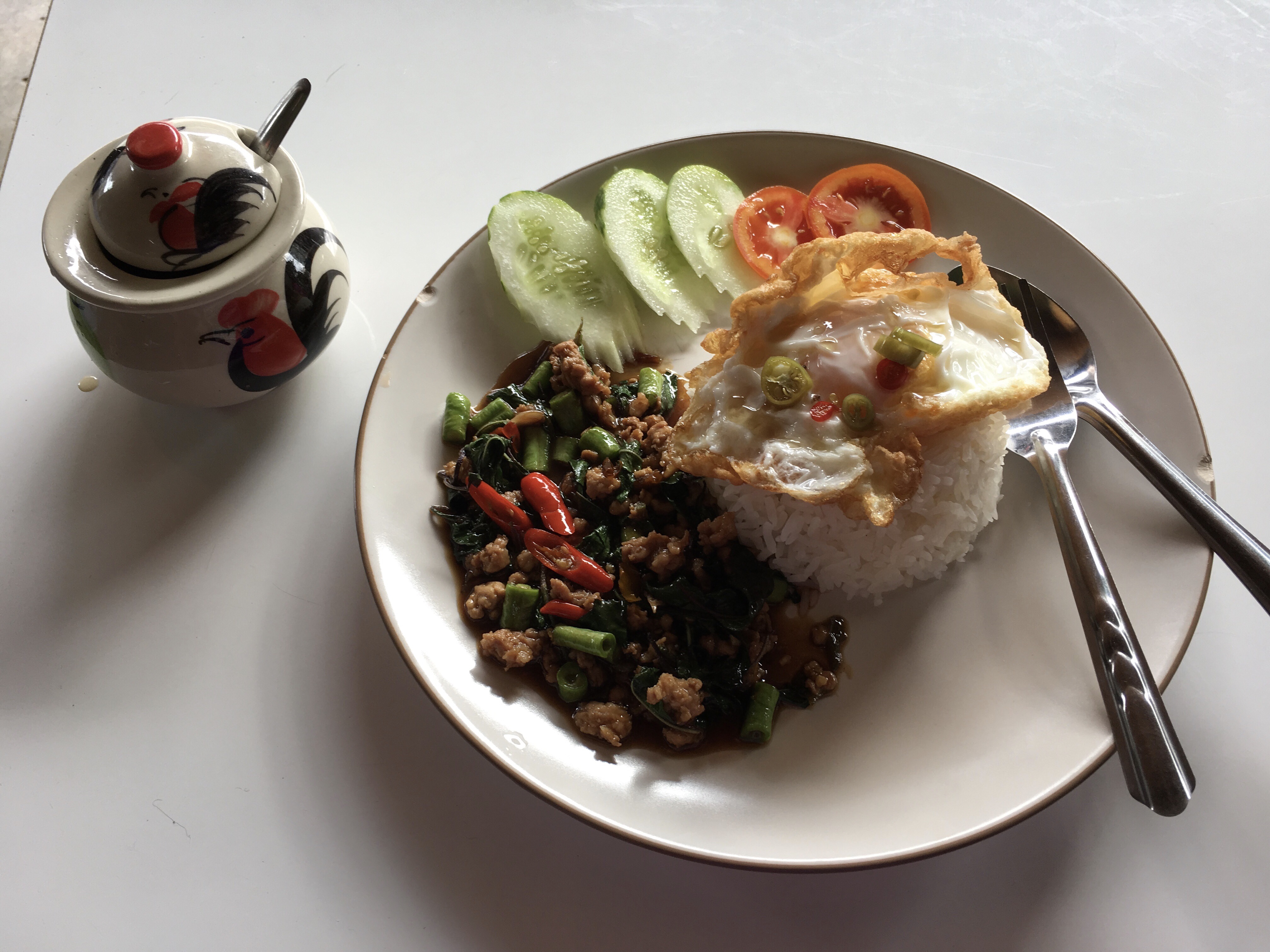
Pad grapow moo
Phrao is a really small town, which surprised me a little because it is an amphoe – the equivalent to a county seat in the USA. Basically it’s a one block town. I made the complete circuit and found an empty restaurant that was just opening. I fueled up on my go-to dish of Pad Grabow Moo (spicy fried pork with chilies and basil). If I am ever executed, this would be my request for my last meal.
I rode west – oh my food has come! … Now I’m back in the Sleeping Tree – I better finish this soon because I am knackered good. Where was I? I rode west of out of town through the rolling hills covered with fruit orchids. As I approached the western range front, I had a choice to make – take the main road west through the mountains, or take the road less travelled which goes over the mountains to the north. I chose the north.
Google street view showed a reasonably paved road winding its way north, but what it didn’t show was all the up and downs, nor how steep the climbs were. Two 1 km hills went straight up; I had no choice but to dismount and push my bike. The first of these was so steep I could barely get my bike up it.
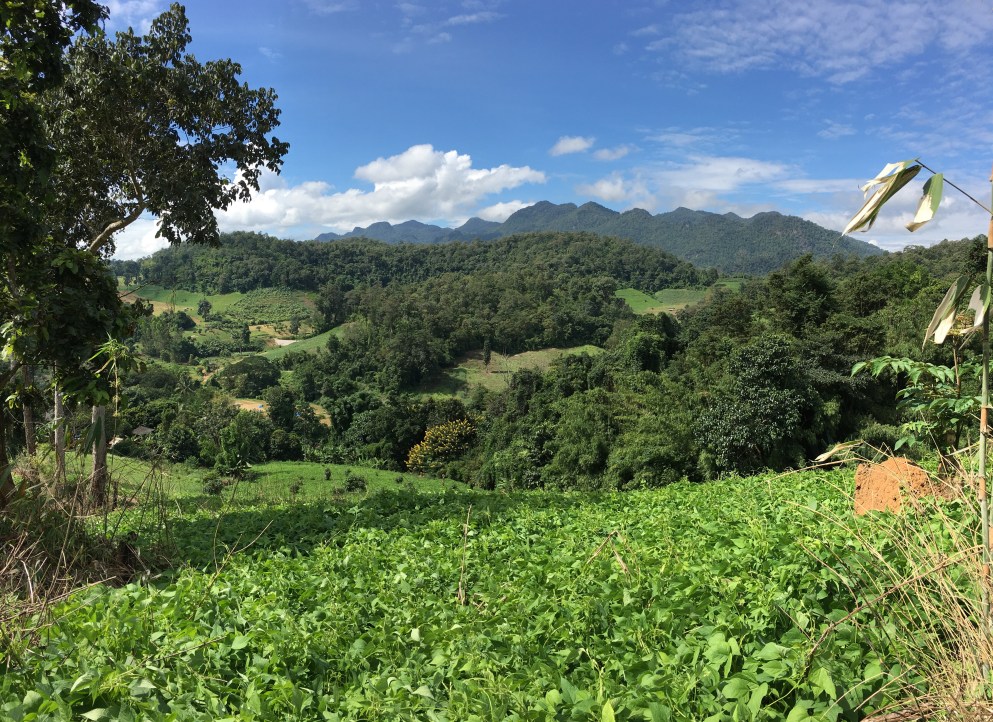
Although this route was brutally mountainous, I was amply rewarded with views like this.
I finally emerged from the mountains by about 2 pm and joined the main Chiang Mai to Fang highway. Unlike Phrao, the Fang Basin is a pancake – with the additional benefit of a constant stream of traffic whooshing by me and providing a nice draft. However the ride was far from pleasant. About 30 km south of Fang, the route turns into a Thai version of one of those endless strips of busy roads that lead into so many towns in the US. I rode through 30 km of roadside markets, car dealers, factories, 18 wheelers, and endless road construction. However civilization has it perks. I stopped at a huge gas station plaza and bought myself a well deserved Coke Zero. I also proved the common adage that “hunger makes the best spice” by having a DELICIOUS meal from Five Star Chicken, Thailand’s version of KFC in a push cart.
I arrived finally at my hotel in Fang. An excellent workout today. This town is a bustling place with lots of dusty traffic. I’m not sure what is driving their economy, but it seems to be somewhat of a boom town.
You know what happened from here already – so now it’s time for a nice long sleep. Talk to you from my next stop.
As I was getting ready to set out on my 2 week adventure, and while I was going through my checklist and locking up the house, I had this short conversation with myself:
Myself: What the fuck are you doing? We have a nice climate-controlled house with a luxurious bed. You have all your favorite foods nearby and your friends are here. Now you’re telling me that we are going to spend several hours a day over the next 2 weeks, alone, all bent over, sweating profusely, with a 3 inch wide seat crammed up our crotch?
Me: (meekly) Well….ah….yea….
Myself: Have you heard that every 20 minutes someone is killed on the roads in Thailand? Are you TRYING to get us killed?
Me: Well most people die in bed you know….
Myself: Yes but they die of OLD AGE you doofus – we’re going to get run over by a minivan, I know it.
Me: We’ll be wearing a helmet, and I will keep left….
Myself: Let’s just forget this nonsense…put that bike away, take off those silly pants with the padded crotch, and lets just go back to bed. We can get up at 11 and go play golf.
Me: Oh just shut up.
Ready to go!
I forgot about this conversation as soon as I pedaled down my soi. I felt free. I could hear the road calling me. The weather was nearly ideal – high clouds to block the sun, temperature in the upper 70s, and only a gentle wind in my face. Life is good!
My route today took me northward along the banks of the Mae Ping River over lightly travelled, narrow, but smoothly paved roads. The first 30 km followed my usually training route, winding through rice paddies and small villages, never straying far from the river on my right. I know every temple and pothole along these roads. The terrain was Kansas flat and I made good time averaging around 22-23 km/hour. A little over an hour out, I made my first rest stop at my usual spot, a small crematorium set beside a lovely oxbow lake.
A lovely oxbow lake on the floodplain of the Mae Ping – my first rest stop.
The rice is ready to harvest.
Finally I turned to the northeast, left the friendly river behind, and climbed up the winding road through the mountains that separate the Chiang Mai Basin from the Phrao Basin. I stopped for lunch at a small village market near the high point in the mountains. One of the nice things about Thailand is that you can get food almost anywhere. After lunch it was mostly a fast downhill into the Phrao Valley – I pulled up to the Klaidoi Resort just after 2 pm and 83 km. An easy first day.
My very own Bungalow at the Klaidoi Resort
The Klaidoi Resort is in the village of Pradoo – which is nothing more than a few scattered homes and business. My quarters are a small bungalow in a very nondescript “resort”. Thais use the term resort rather loosely. But the price was right, 600 baht or about $18. No restaurant here, but the resort owner, Noi, called up the local restaurant (they use the term restaurant loosely too) and the restaurant’s owner came and opened up just for me. I suspect she closed right after I left. The restaurant was a 5 minute walk down the very dark road. No sidewalk here to roll up. The food was good though and the beer was cold.
A quiet but tasty dinner.
Tomorrow it is up and over some more mountains to the bright lights of Fang. Talk to you then.